Part 5 (of 6)
A
camera of one’s own: Dramaturgy, Super 8, expressionism, chronicles of the
London Film-makers’ Co-op
Anna Thew in conversation with Nina Danino (2020/25)
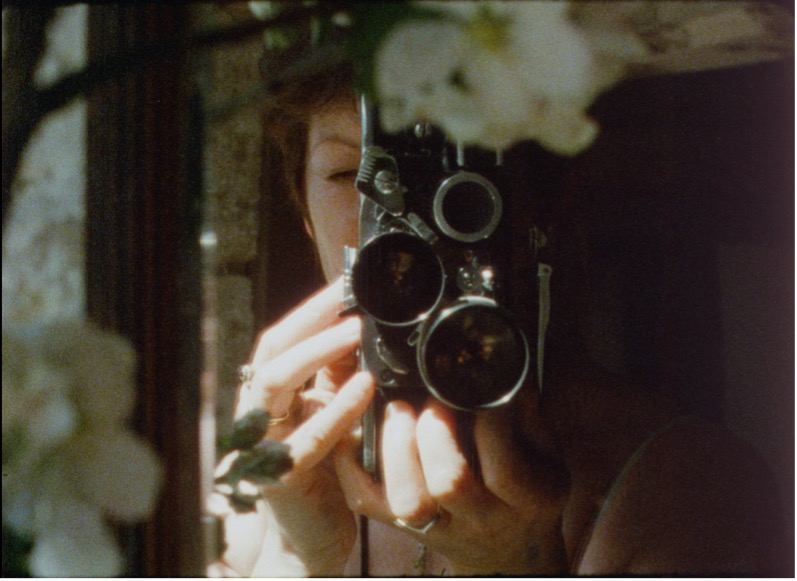
Still,
Anna Thew filming in Poems and
Constructions II – L’Isle sur Serein (2008).
Copyright
Anna Thew. Courtesy of the artist.
_______________
Shaped from
an online conversation and subsequent emails between the artists during and
after the first COVID-19 pandemic and lockdown in the UK, this text captures an
extended and ongoing conversation between Nina Danino and Anna Thew, who have
known each other since the 1980s, when they were both members of the London
Film-makers’ Co-operative, where Anna Thew was Distribution Organiser
(1980–1982). They recorded this discussion on 10 May 2020 and later revisited
their transcript in 2023/2024/2025.
________________
Anna Thew has worked collaboratively with friends, fellow artists
and filmmakers on her films from the time she was in her final year at Chelsea
School of Art in 1978. She likens her practice to belonging to a theatrical
troupe. In her authored films there are strong group and collaborative dynamic
production methods, where participants take up roles and parts in the films.
There is a strong performative and live aspect, which is not scripted but
invited through mise-en-scène, staging, lighting and camerawork.
Anna Thew’s films often are
strongly referential of other experimental films. They follow her erudition in
Italian Literature, Renaissance Art History and film knowledge, with a
chronicler’s focus on detail and mapping artists around the London Musicians’
Collective and the London Film-maker’s Co-op in the 1980s. Anna Thew operates
the camera and is the maker of her films but she crosses roles, also becoming a
performer and member embedded in the group by appearing in her films. There is
a strong aspect of being in front of, and looking through the camera, framing
events and scenes, with the camera as the impetus and centre of this theatrical
environment. Being a subject in the film slips into being an actor through
adopting parts and roles, or being herself as a filmmaker. Roles are always
interchangeable, performative.
In her works, the camera is
frequently hand-held, handled and a central eye. In the context of this wider
interview series examining Nina Danino’s conception of the ‘intense subject’ in
filmmaking, it was not easy to find an individual subjectivity in Anna Thew’s
collective movability, although the collective can and does form a body in her
works. There is strong aspect of self-inscription. However, a subjective thread
is discernible. In this interview discussion, the piano emerges as an
instrument of solo moments of nostalgia through both Anna Thew’s playing, or
playing by other pianists. Her love of piano and music emerges as a strong
presence of a singular introspective activity: the path also followed by Nina
Danino and Anna Thew as their discussion progresses.
Extract from an email sent by Anna Thew to Nina Danino (28 March 2020) – There's perhaps an urgency for us to get our archival act together, “Before we too into the dust descend” and the ether may not be the best vehicle – a solid tangible tablet, a desirable tangible heavy book – as if it’s as bad as the Black Death of 1348 that reduced the population of Europe by over two thirds, I doubt that anyone is going to be trawling through a little known group of experimental women film-makers' mountains of 6TB drives – not even on LTO yet – with only a 3 year guarantee – if we snuff it from the virus…
________________
This conversation is one of a series of six discussions undertaken
by the filmmaker Nina Danino in 2020. They were revisited and edited in
2024/2025 when they were published online.
Please note that the opinions and information published here are
those of the speakers/authors and not of LUX or the wider research team and
institutions involved with their funding, transcription and publication.
Published online by LUX, London (2025)
Editing and research: Claire M. Holdsworth (2020/2025)
________________
Conversation
Edited transcript of conversation
recorded remotely, 10 May 2020 (London)
Later compiled/edited via email
(2020/23/25)
_____
Nina Danino:
These
conversations are on the theme of inscription and the subjective rather than
going into interpretations of individual works, but to take some themes in the
work and the practice to gain an insight into how and where the inscriptive, or
inscription might be in experimental films. Could we talk about the singing in Eros Erosion (1990). Is it you singing
at the end, over the shots of the
Alps from a plane?
Anna Thew:
It’s a friend, American
beat poet, Carlyle Reedy singing My Funny
Valentine. I secretly recorded her playing my piano after her wild young
lover, musician, Pete Smith tragically died in a fall leaping from roof top to
roof top. It’s Carlyle’s voice that you hear over the ropes and boats in Naples
Port describing how she came to the mortuary and found the dead body of her
lover, “and I saw the dead body and I
knew it was dead”. Her voice is filled with grief. Then that Rogers and
Hart song is picked up at the end of the film over the Alps.
Nina Danino:
It is haunting. There
is piano music also over the scenes in Naples. Is that you playing?
Anna Thew:
I did play a little
Domenico Scarlatti sonatina (Longo
No.104, K.159, Allegro), over the Naples Street scene. So you play and make
a mistake and then you can cut (the mistake) and join the 16mm magnetic sound.
Domenico Scarlatti and his father, Alessandro Scarlatti were from Naples. So, I
played this little quick Neapolitan bit. Then I play a drift of Benjamin
Britten over the moors. Otherwise, what’s important in Eros Erosion, is the use of resonant abstract piano sound, which I
made inside my Dad’s old Steinway upright piano. I collaged sections. Some are
slowed, so you hear ‘Vroom…’. Then
sometimes you hear a bright tiny tinkly sound. I actually layered them across
one another, so you get a recurrence of that prepared piano sound throughout
the film.
Nina Danino:
The
piano provides the soundtrack to many of your films, you often talk about your
music and what you are practising and playing on the piano.
Anna Thew:
The piano, my Father’s
piano, has its own story that I was beginning to map on film in 2010/11. It was
really going to be an installation called Stolen
Time, from when I had the action restored. In music, the expression tempo rubato means stolen time… like
gathering something rather rapidly. It’s not accelerando. You’re stealing
time. You’re shrinking time. It’s a great phrase. I’ll send you the
quadraphonic soundtrack, which was played from four speakers with a rough cut
double screen at Contact Festival, Apiary Studios, London (2016). My Father was
a miner’s son from Castleford and everybody in mining communities up North,
almost every household had a piano, a violin (fiddle), or a flute. My Father
played and sang as many working class families did in the 1930s and 1940s
before television killed it all off. When he was posted to India during World
War II, my Mother went out – she didn’t know anything about pianos – and bought
this rather wonderful Steinway vertegrand
(upright-grand) from a lady pianist in Sheffield. It’s overstrung. It’s got
long strings and has a really resonant tone… a fantastic tone in the bass. When
my Father could no longer play, he let me have the piano. We had it restored in
the Steinway Marylebone (Lane) workshop in 2010/11 and Christopher Hughes and I
documented the process over 3 months, on film and Hi-band. Dad’s piano’s been
part of my life. It was always in the living room, and it has a wonderful tone.
It’s a bit like the Pied Piper of Hamlin
that draws you in… My Father and Mother both sang. My Father had a beautiful
bass voice and my Mother was a contralto. People would get together round the
piano and sing. I started piano lessons when I was very tiny. I hated the
teacher so I would lock myself in the outdoor loo in this School House in
Woodlesford near Leeds and kick and scream and refuse to go. Then he stopped my
lessons.
Nina Danino:
You
said you had been playing Duke Ellington’s Solitude
(1934). How much is playing a part of your life as well as its role in the
films.
Anna Thew:
I actually never
stopped playing the piano. I taught myself to play from learning to sight read.
It’s always been at the centre of my life, but more recently when I started
having lessons, it actually became even more critical. But in all the films
there is a little bit of piano music and piano sound.
Nina Danino:
In
Hilda was a Goodlooker there is a
scene with you as a cabaret singer. This is intercut with images of Sheffield,
workshops and steel works. Can you talk about your role as a cabaret singer in
the film.
Anna Thew:
Now in Hilda, I’m just doing what we used to
do. I mean, at Christmas my sister and I used to dress up and put balloons down
our dresses like Hinge and Bracket
and we’d sing, “Who is Silvia, What is
She?” (Schubert, An Silvia,
1826). So I dressed up for Hilda. It
was important because Hilda was about
family and home and my mother mentions Harry, my mother’s half-brother, “an’ ‘e used to croon at the piano” and “’is little dog Floss used to croon along with ‘im”. In Hilda, I play and sing, “I’ve Got You Under My Skin” (Cole
Porter, 1936), meaning I’ve got Sheffield under my skin.
Nina Danino:
The wide shot of the
cabaret singer is intercut with close up shots of you scratching your arm or
your leg which disrupt the performance and you and the pianist, who is Martin
Lugg, stop to have a cup of tea, which is comical.
Anna Thew:
I was spoofing. I’m
scratching my arm because I’ve got Sheffield under my skin and I’m scratching
my leg. So it’s just a spoof, but I’m not singing how you’d normally hear it
sung.
Nina Danino:
How would you hear it?
Anna Thew:
I’m a cabaret singer in
that film and the type of voice I’m using, is because I have a rough contralto
voice. At the time I was a smoker and I used to be able to do and still can do
a very effective Marlene Dietrich impersonation. My sister and I used to
compete about how we’d do a turn from Der
Blaue Engel (1930), “Ich bin von Kopf bis Fuâ auf Liebe eingestellt…” (Falling in Love Again).
Nina Danino:
It strongly makes me
think of Germany and Berlin in the 1930s?
Anna Thew:
I just did what we used
to do at home. Martin’s Father was a pianist and organist, so Martin’s trying
to look like his Dad. He’s got these spectacles. We were learning. We weren’t
very good at lighting, so it looks as if the shadow of the microphone is sticking
out of the top of his head [laughter].
Nina Danino:
The sound drops out in
places and there are a series of halting phrases. The singer is also at points
detached from her own voice.
Anna Thew:
Well, the films play
with synchronisation. I hardly ever use sound synch in my films and in that
scene in Hilda, there’s no-one behind
the camera. We’re in the old London Musicians’ Collective. We stuck the Arri BL
on the tripod. We raced in front and Martin’s pretending to play the piano. I
rush over, turn the camera on, then rush and turn the sound recorder to ‘PLAY’.
It was a Nagra III, not a Nagra IV with crystal synch, so the playback was out
of synch. Fortunately, we’d filmed ourselves having a cup of tea and scratching
my leg, just in time.
Nina Danino:
Were you thinking of a
method of filming which is Brechtian perhaps and the results are disrupted?
Anna Thew:
Yes, well the use of
the piano and the way in which you introduce those pieces, because you’re
having to assemble them and you’re not doing a whole performance, you’re using
a fragment and you drop it in and you take it back out again. I think with Hilda, what one was doing, was using and
playing with all the things you like to have. It was an intentionally
deconstructed narrative.
Nina Danino:
Cling Film (1993), you perform the
role of Rose Hobart in the black and white silent film East of Borneo (1931), which is the found footage which Joseph
Cornell used in his blue tinted film, Rose
Hobart (1936). The tint of the film and the mannerisms of the actress are
so funny. Did you want this to be a reference to early studio film within an
avant-garde film within an experimental film and so on?
Anna Thew:
Yes, that’s the
reference to Joseph Cornell’s Rose Hobart
(1936) which was the earliest
found footage collage film.
Throughout Cling Film there are
references to avant-garde film. It’s a little game that you can play. Rose Hobart is one of my favourite
films. I couldn’t afford the copyright from Anthology Archives N.Y. My
performance is not really like Rose Hobart, more like Pearl White. The
soundtrack is Holiday in Brazil (1957).
That’s the sound track that Joseph
Cornell played with Rose Hobart. It
was a Latin tune that was in vogue at the time. Joseph Cornell never put it on the film. The reel-to-reel sound was
always played separately from the film. So I appear as Rose Hobart, who’s a voyeuse
and I’m re-acting with alarm to the action (sex scenes, crocodiles and
volcanoes). Holiday in Brazil was out
of copyright. I was able to purchase the rights for very little, but we’d
transferred it both forwards and in reverse and that is collaged in. There’s a
snatch of Bela Bartòk over the Nosferatu
clip and some staggered chords dropped in from Gershwin’s The Man I Love, but
infringement and playing with copyright is a game throughout Cling Film (1993).
Nina Danino:
More direct is the
voice over of your mother in the soundtrack of Hilda was a Goodlooker where she is talking about her memories of
her family.
Anna Thew:
My Mother would have
loved to have been in the theatre and she was very good at storytelling. She
was quite theatrical. She used to read poetry. Had she not been from a lowly,
humble background, she probably would have been like us and she would have gone
into drama. My Mother tells the story of how she dresses up in an orange coat
with this (rabbit) fur collar and walks up the marble staircase like Lady Muck and she tells of her brother
Harry who was dark and handsome, how she was posing as his girlfriend going to
the Scala Cinema in Sheffield, which was all marble. We filmed this scene in
the Cambridge Theatre on Cambridge Circus, where they were showing Les Misérables. I used the marble
staircase there. We only had an hour to light it. So I waltz up the marble
staircase “like Lady Muck” and I play
my Mother (lighting/camera Ian Owles, Marek Budzynski).
Nina Danino:
You said in our e-mail
exchanges prior to this conversation that the reason you made the film was
because, “My Mother had always wanted to be near to the theatre […]. Now that
she was retired I would help realise her dream to be near to the theatre.”
Anna Thew:
My mother died in 1983
during the making of the film. I play my Mother play-acting, my Mother’s dream
of being a diva, of being an actress, of being in the movies.
Nina Danino:
Were you always going
to play the part of your Mother as a young woman? There is also Hermine
(Demoriane), who plays your mother’s half-sister Hilda. Hermine was herself a
chanteuse in the London performance art scene which in turn mirrors you as a
singer. In these female roles the real women and characters play each other.
Anna Thew:
No,
I’d intended my Mother to re-direct scenes that I’d imagined wrongly. There’s
also singing of Kurt Weill and other variety songs. At Chelsea, I was involved
in this theatre group and I wrote some song music for the staging of Brecht’s The Messingkauf Dialogues, after Hans
Eisler’s “Ich hab’ mein’ Sohn die
Stiefeln und das braune Hemd geschenkt” [I sent my son the boots and the
brown shirt].
Nina Danino:
Kurt
Weill, you use Brechtian alienation techniques in Lost for Words (1980) and in the singing and assemblage in Hilda was a Goodlooker (1986), as we discussed, where you perform
Cole Porter’s song in the style of voice of Dietrich – one of her most famous
roles – the avant-garde theory of montage is invented in this period but it is
also a shadowy period of history.
Anna Thew:
I studied
German language and literature, Friedrich Dürrenmatt, Heinrich von Kleist,
Rainer Maria Rilke, Goethe naturally and Bertolt Brecht’s Mutter Courage und ihre Kinder [Mother Courage and her Children]
(1939) and Erwin Piscator.
Nina Danino:
You were studying
Painting at Chelsea between 1974 and 78 but said you were involved with a
theatre group. Was it part of the course? How did this influence your films?
Anna Thew:
There was a Brechtian
theatre workshop lead by Alexei Sayle (ex Chelsea) and my old thesis tutor,
Yehuda Safran. Actually the tutors were so into it that we had about four
tutors and four or five students and we staged these pieces (by Bertolt Brecht
and Garcia Lorca). I wrote the Hans Eisler sound-alikey tunes with impossible
intervals to some of the Brecht poems. So film for me, was an opportunity to
involve all those aspects. The first film that really inspired me to pick up a
camera was Anne Rees-Mogg’s Real Time
(1974).
Nina Danino:
You
have called the teacher and film-maker Anne Rees-Mogg, the Great Aunt of your
film family, who changed your life with her film Real Time.
Anna Thew:
In
Real Time, she uses words. She uses
accounts. She uses diary, the family and she uses direct experience. She also
uses songs that she likes, like, “I would
sit there in the gloom of my tiny little
room, if I had a talking picture of you-ooo, you-oooo!”, as she drives
Westwards and home and it’s so, so poignant. It’s like OK, you can do this. You
don’t have to just do painting and
because just painting was getting to be a problem… I didn’t realise that I
quite liked words as well, you see,
because I was steeped in literature. And then I started to do word paintings. My first word paintings, the
really big diptychs (2.4m x 1.2m) were layered conversations about having Dad’s
piano, Wordpaintings (1982).
Nina Danino:
In Eros Erosion (1990), as we said earlier, ends with the shot over
the Alps and it is set in the back streets of Rome and Naples. Italy and
Italian literature permeate many of your films. Eros Erosion re-tells Lisabetta’s story from Boccaccio’s The Decameron (1350–52). Italian is
heard recited in quotes of poems, readings and words, in text and on the
soundtrack.
Anna Thew:
I’ve always been
interested in words. I talk all the time. I’m a chatterbox so there’s no way
that I’m not going to be interested in words [laughs]. I always liked poetry
and song. I wanted to be a painter all my life. I went into languages, not
because I wanted to, but because I couldn’t do Art A Level at the school I
ended up at, Don Valley High, where they were trying to up their Uni figures. I
got into Manchester to do French and German BA Hons. I noticed that if I
studied BA Hons Italian Studies, I could do Art History as well as literature.
I started studying Italian in earnest and got onto the Italian Studies course.
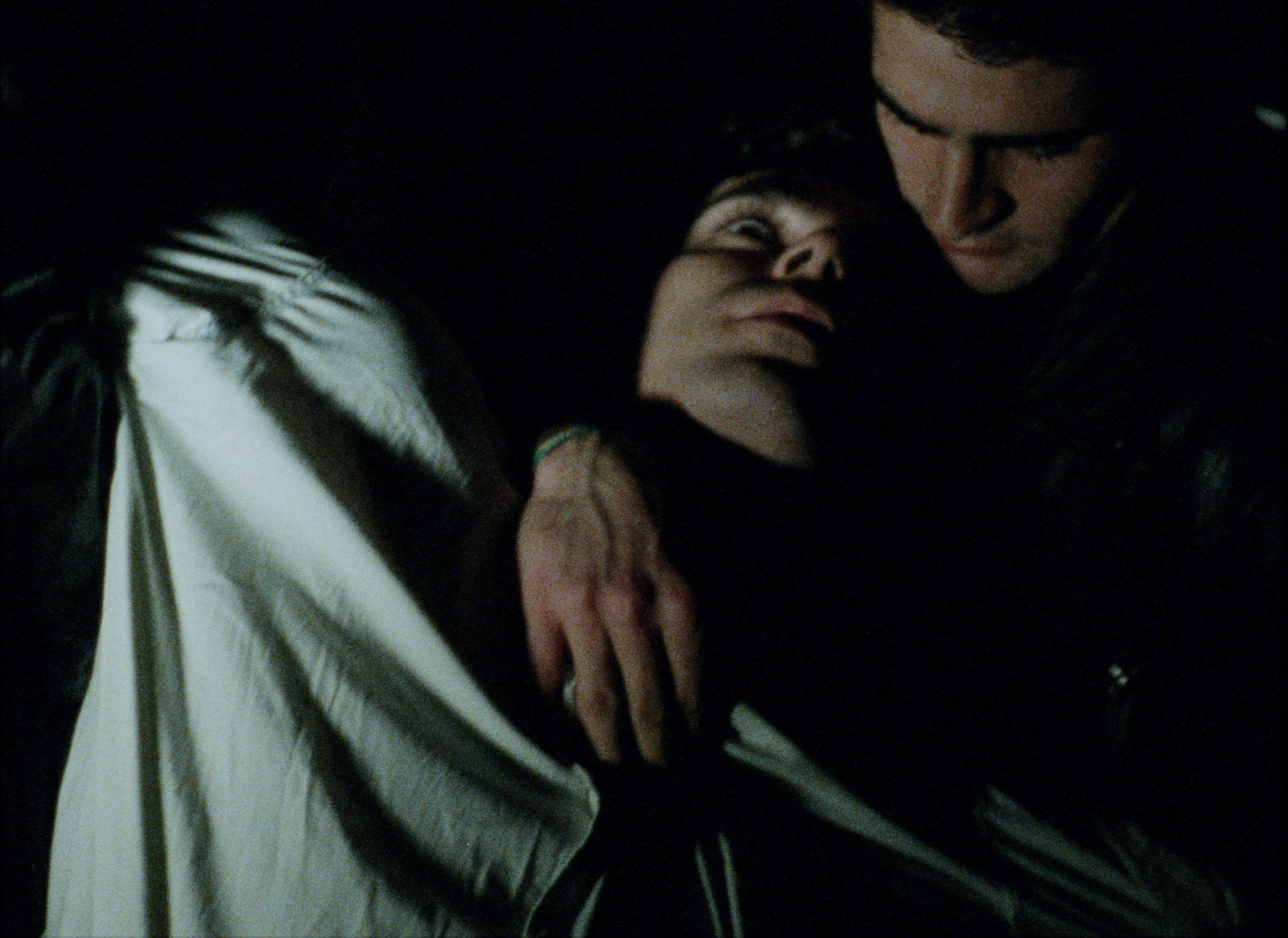
Philipe
Barbut as Lorenzo and Toni Dominici as the brother of Lisabetta in Anna Thew, Eros Erosion (1990).
Copyright
Anna Thew. Courtesy of the artist.
Nina Danino:
How did you go to a
Fine Art course?
Anna Thew:
Through
Alastair Smith at the National Gallery and my old Professor Giovanni
Aquilecchia at Bedford College, London.
Alastair was my Italian Art History lecturer at
Manchester. He later became director of Whitworth Art Gallery, Manchester. I
was applying to the Courtauld Institute to study MA in Quattrocento (1400-1500)
Italian Renaissance Art and both of them, who were going to give me a
reference, said the same thing,“Why don’t
you just do what you’ve always wanted to do and apply to do painting?” So,
I did. I went to Chelsea and I did Foundation and then FA Painting. There were
these wonderful opportunities, meeting people like Anne Rees-M on the very
first day, when rather than doing any painting, we were sent out with a stills
camera, a roll of Agfa Dia-Direct film and a tape recorder to document our
first day at Art School. We did a slide-tape piece, which we then re-filmed on
Super 8. Slide-tape and Super 8 were introduced very early on, as were film and
photography. These were new things to me and there, they were offered on a
plate in the Foundation year at Chelsea. When I was painting, mostly abstract
very early on, I was doing collage and that collaging process is in the films
and the ways in which I edit are the things that one learned and really loved.
I was very into Dada (1916). I really liked the notion of chance procedures
which are used almost entirely through my film/editing process. I might have a
plan, but then there will always be an element in which you will have a kind of
automatic writing, an automatic drawing, an automatic choreography/calligraphy
of the camera. Then once I started to return to figuration in my large dancers’
paintings and chiaroscuro drawings in series, I began to film.
Nina Danino:
In
our exchange of e-mails prior to this discussion, you write that “Playing can
lead to a kind of self-fashioning and create a sense of community.” And that,
“Often also the enlistment of friends and those willing to help plays a role in
experimental film. Sometimes this becomes an important documentation and
history in itself. Often those participating become themselves known in their
own right, lending the activity validation.” Can you
say more about the collaborative aspect of your practice which is very strong,
like being a ‘family of travelling players’, the methods of the theatre are
very forming and you also refer to your use of Brechtian acting techniques in
your first 16mm film Lost for Words,
“a parody on the urban wasteland film, where a little girl recites Karl
Marx and the last man on earth to read and write is interviewed”. The mix of tutor performance artists and
film-makers at Chelsea were part of an
experience of collective practice that appealed to you.
Anna Thew:
Well, there were
wonderful people that I met there like Keith Milow, who was one of my tutors,
whom I’ve actually met up with recently again. He was doing subversive abstract
reliefs with crosses at the time. He was quite important to me. Then someone like
Ken Kiff who worked with the subconscious. It was more the tutors like David
Medalla, Ron Bowen and of course, dear Anne. I quickly ditched out of the
Manresa Road building, because I became friendly with Jock McFadyen on the MA
down at Bagley’s Lane. The undergraduates’ studio was a huge empty studio. So
he said, “Why don’t you come down to Bagley’s Lane?” So I went down there and I
was doing huge abstract layered paintings. I mean, they were very big
triptychs, around 18 foot across, washing the paint off with hose-pipes. They
looked a bit Frank Stella like… and I loved Elsworth Kelly.
Nina Danino:
That gives a really
good description of the art school experience of the 1970s. We were almost
entirely self-taught. There was no pedagogy as such when I went to St.
Martin’s. What was your experience of the studio?
Anna Thew:
I started making a
Super 8 film of 35mm slides of men’s faces, called From Face to Face (1978). I’d
started taking their pictures with b/w Agfa Dia-Direct (slide film). In a way,
I was playing around with the idea that men actually really liked to have their
pictures taken, to be desired, like women. I had three particularly handsome
ex’s and then there was riveting David Medalla. So there was one gay person in
there. I went to Paris to film my first love, Sandy (Spencer). His best friend
Alain (André) was a clown who appears in the film. He takes the mickey out of
the guys having their photographs taken. At one point, a friend (film-maker,
Debbie Gillingham) and I were on the sound track, saying they weren’t really
good enough, like a casting. In the end, I decided it was too mean and I wiped
the track. Now the film is just faces of these men you love to look at, that
look at you through the camera. In that film, it’s how men become objectified.
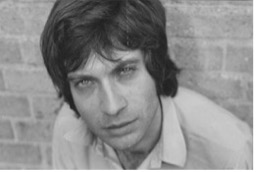
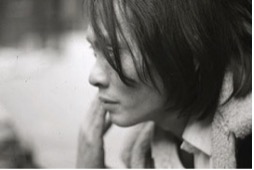
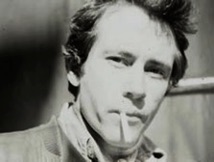
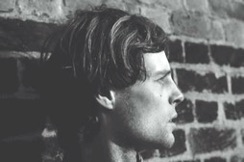
Stills
(left to right) of Karel Zuvaç, David Medalla, Sandy Spencer and Martin Angel
in Anna Thew, From Face to Face (1978).
Copyright
Anna Thew. Courtesy of the artist.
Nina Danino:
In Laura Mulvey’s
concept of ‘to be looked at-ness’ woman is coded as the object of the male gaze
and it isn’t supposed to be symmetrical with a female gaze on a man. Some men
in your films present themselves as ‘to be looked at’ like sailors – is it a queering
of the look?
Anna Thew:
No, it’s not queering.
It’s woman-ing. This was the female gaze. I wanted to show that men
enjoyed being objectified… desired…
Nina Danino:
Films are all about
positions. How did you start making films?
Anna Thew:
I started filming the
opening scene of Lost for Words in
1978, when I was still at Chelsea. That was the wasteland scene. I had a lot of
help from Anne Rees-M, of course. I was also very friendly with artist Jock
McFadyen, who was making films. So was Richard Welsby, who was in the same year
as me on the BA Hons course, and Ian Owles, then at the RCA. So there was a small group of us who made film and did painting.
People were swapping from one to the other and there was a small community.
Jock had us in his film The Case
Continues… (1977) with Helen Chadwick and Giles Thomas. I was a cloud. Then
I was in a film and my friend Monica (Molnar) was also in Jock’s Close Encounters of a Martian Missionary (1976)
which was very picaresque. I don’t think he probably knew about the American
avant-garde, James Broughton or Sidney Peterson, like The Pleasure Garden (1953) with Hatti Jacques, or Loony Tom (1951), or The Lead Shoes (1949), but there was
certainly a very, very close link, because Jock did these paintings which were
sort of quirky with subtitles. We were all very much into semiology, Roland
Barthes and the meaning of the image and the play with word against image. That
was very current at Chelsea in particular. Jock was hugely influential on me in
the beginning.
Nina Danino:
What made you decide to
perform in your own films? In Behind Closed Doors (1988) you are in front of the camera and also
director, where you become the Christ-like figure from the Raphael painting, The Deposition (1507), where you are
carried around naked like a corpse. There are quite a few people, film-makers
involved as dramatis personae
including Derek Jarman, Kenny Morris, Julie Osborne, Adam Elliott, Steve
Farrer, Emina Kurtagic and Richard Heslop (James Mackay was camera operator and
Christopher Hughes was lighting camera for that scene).
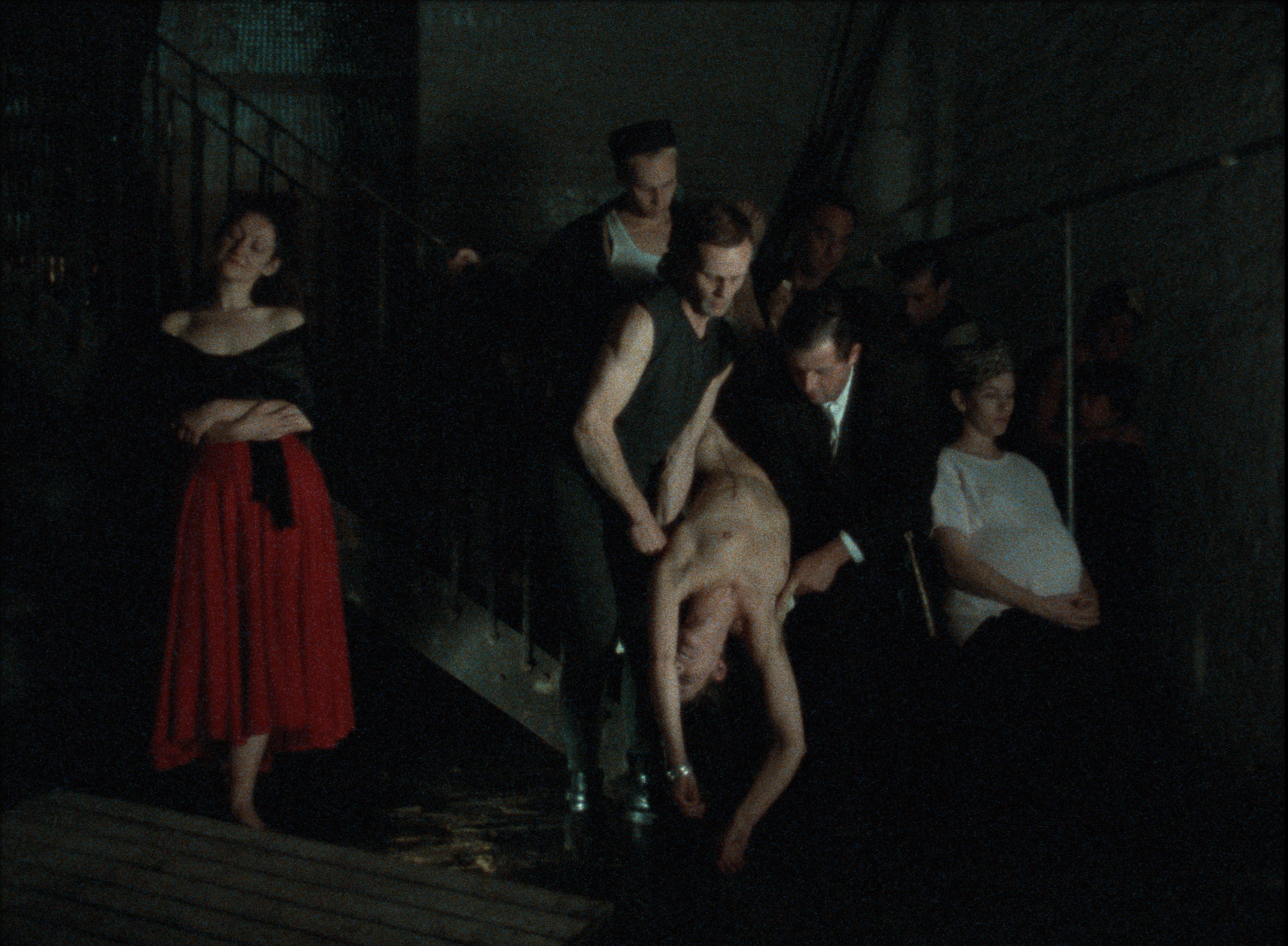
Still
from the final ‘Deposition’ scene, Anna Thew, Behind Closed Doors (1988).
Copyright
Anna Thew. Courtesy of the artist.
Anna Thew:
It was just an
automatic thing to become involved. If you’d actually been involved in language
and you played the piano and you used your voice and you performed, because
I’ve always been a bit of a performer, so you do that and then you use
yourself, where it is too difficult for others… to be a naked corpse being
dragged over a pile of rubble.
Nina Danino:
Was theatre
and performance also part of early expanded film experiments ‘somewhere between
theatrical and performance art’?
Anna Thew:
Well, yes, with Anne,
we went up to the Co-op. We went to see Jock’s film. I think it was Close Encounters of a Martian Missionary in
which I was in jumping in and out from behind a tree and there was a chase
around Battersea Park… a cupboard with its doors opening and closing so that it
looked like a human being, and it was very
silly. Yes, we’d go up to the Co-op with Anne in her Ford Cortina. So I had a
few little sessions where I went to see other people’s films at the Co-op, when
it was at the Piano Factory in Fitzroy Road, Camden. That would’ve been in
1977. It was Anne who introduced us to the Co-op. She introduced every student
of hers, Chris Welsby, Richard Welsby, Renny Croft, David Pearce, Ian Owles,
Jenny Okun, Guy Sherwin, Willi Keddell, Tony Potts, Nick Gordon-Smith, Mark
Greaves, Mark Sheehan, me, Jock. All of those people were at Chelsea and they
were all posted off up to the Co-op by Anne, who believed in the Co-op, still
(from 1966).
Nina Danino:
You say
that before 1980, there was almost no theatrical performance at the Co-op. Can you talk about the overlaps
between the LMC and LFMC? In On Leonardo
(1977) you combined your performance and slide/tape projection of the Mona Lisa
with “burning screens and readings from Leonardo Da Vinci’s Trattato della Pittura [Treatise on
Painting]”. Did you engage with expanded screen and collaborative work with
artists in other fields like music or theatre in the context of the Co-op?
Anna Thew:
Yes, there was David
Medalla and his Artists for Democracy,
Whitfield Street (squat, 1976–1979), where I did my first performance in 1976….
and where I met Tina Keane (from London Video Arts), Harriet the stripper, beat
poet Carlyle Reedy, musicians and performers Anne Bean, Stephen Cripps (from
the London Musicians’ Collective), dancer Atilio Lopez from the Lindsay Kemp
troupe, and at the Co-op, Paul Burwell who was on the London Musicians’
Collective Exec. and was Annabel Nicholson’s ex.
Nina Danino:
The Co-op was based
on16mm, did you use the workshop?
Anna Thew:
My very first film, From Face to Face, was Super 8, with
sequences re-filmed from b/w slides, but my first 16mm film was Lost for Words. I filmed the first
wasteland scene and Ra, my daughter, reading from Marx’s Communist Manifesto when I was at Chelsea, as I said, but then I
carried on making that film at the Co-op in 1979-80. When you worked at the
Co-op, you made a cup of coffee and you chatted to people, then you were stuck
in your edit room with your pic synch, which wasn’t even a motorised one. It was
just a winding pic synch. You got really bad eyesight after you’d finished
looking at the tiniest little screen with one eye and so I edited Lost for Words there. It was when I was
at the Co-op editing that I met James Mackay, who was doing the Cinema, and
Mick Kidd (BIFF cartoons), doing the Distribution. They then persuaded me,
along with Jock, who was in and out of the Co-op at that time too and living in
our house, that “it’s about time you got
a job and there’s a job going in Distribution”. So they persuaded me, these
three guys, to apply for the Distribution job.
Nina Danino:
Can you
give a window into that context of your time distributing? When in distribution were there
particular initiatives that you set up? You launched
the annual Distribution Preview Show in 1981 and were involved in the Summer
Show in 1982. The Summer Shows were so important to artists. I showed my
RCA film First Memory (1981) at the
1982 Summer Show, it made all the difference to have a cinema exhibition
context for your work.
Anna Thew:
I started working in
distribution in 1980 and that’s when I met Peter Gidal. I wrote about it in Between The Lines for the 20 years of
the Co-op catalogue, LIGHT YEARS (1986).
He was sitting next to me at the 1980 AGM and he put forward the motion that
was voted in, that at least 50% of women should be on the Co-op Executive
Committee. Yes, that was my first AGM.
Nina Danino:
The LFMC as a feminist structure that’s very good. There had been
a split and Felicity Sparrow, Lis Rhodes and Mary Pat Leece founded Circles in
1979, but Peter Gidal was very feminist and both he and Malcolm Le Grice
proposed 50% women, as you say. In another interview I have done for this
series, Barbara Meter quotes Annabel Nicolson, who said the men at the Co-op
were natural allies. The men founders were central in bringing the structure to
50% representation in the organisation.
Anna Thew:
At that time, in
Cinema, you were only there for a year. At the 1980 AGM, they voted Steve
(Farrer) in for the Cinema. I was voted into Distribution and Jeanette Iljon
was voted into Workshop with Nicky Hamlyn. The two workshop organisers would be
there for only two years and would overlap. So each year they were voting in
new organisers. I started working with Steve in 1980, but interestingly there
had been an anti-feminist débacle over the Susan Stein affair the year before
and almost the whole executive had resigned, like Deke (de Dusinberre the IV).
It was quite interesting because Susan, who had a crush on Steve, had been at
the Royal College (of Art) and she wanted to do the Workshop job, but she’d
also started as a student at St. Martin’s and the men said she couldn’t hold
down the workshop job and be at college at the same time. She replied that
Steve had done the workshop when he was at the Royal College. Guy Sherwin did
the workshop when he was at the Royal College and William Raban! “There are
men that are allowed to do the workshop when they’re at college, so why can’t
I? It's only a part-time job.”
Nina Danino:
Susan Stein recently
posted (on Facebook) a portrait of herself at this time at the LFMC in front of
the Debrie contact printer holding folds of film like a bouquet of flowers.
Anna Thew:
So, the whole thing
blew up and most of the executive had resigned. So, when Steve and I started,
there were only two people (film-makers) on the executive. There was a woman
called Serena Rule from the Royal College, and I think Paul Botham.
Nina Danino:
Can I say something
about her because she was friends with my friend Tony Mucklow, when we were at
the Royal College. The RCA film school was factionalised into camps, feminists,
Carolyn Spry, Robina Rose, the structuralist film-makers led by Peter Gidal,
and the independents such as Steve Dwoskin, the political activist film-makers
such as Chris Reeves, whom I had come across at St. Martin’s Painting
Department and the fiction directors. I was surprised when I met Serena Rule at
the Co-op (she was on the Executive) because she was in the fiction and
documentary camp, like Tony Mucklow I think.
Anna Thew:
She was the treasurer.
She was a treasure. Anyhow, at that time, all the people who were on the Co-op
Executive were film-makers. As we
didn’t have really a functional Executive, we didn’t have a boss. We got on
like a house on fire. So, there was me, Nicky [Hamlyn], Steve [Farrer],
Jeanette [Iljon] and Mick Kidd.
Nina Danino:
We
kept the Undercut bits and pieces,
galleys etc., in the Distribution office. We used to meet there on Saturday
mornings, when it was unoccupied. Nicky Hamlyn who was in the Workshop, was
also on the Undercut editorial
collective. I joined in 1982 at the same time as Michael O’Pray and A.L. Rees.
Anna Thew:
Nicky would go, “Roland Barthes, the silly old fart!” He
had a very sort of anal sense of humour and he used to chuckle. Nicky and Mick
Kidd, who was a truly co-operative person (BIFF with Chris Garrett), he was doing t-shirts and fanzines from the
start and he made Standard 8 films and he loved Kurt Kren. A lot of folklore
came down to me through Mick Kidd, who was a great storyteller, and we all
worked together very happily. He was a very nice guy. He was so honest.
Nina Danino:
Undercut published Mick Kidd (BIFF)’s lampoons, ‘Understanding Media Part Four’ and
‘Win a Fabulous Holiday’ – Undercut
also had writing by and about artists.
Anna Thew:
I wrote about Sandra
Lahire’s films for Film Waves – Art in Sight (2002) after she died in
2001. I was asked to write about Anne [Rees-Mogg] and George Saxon and Steve
Farrer for the Arts Council British Film and Video Artists Directory (1995).
Then I got very annoyed, because they only allowed such a short text. Then when
it came to Johnny Maybury, they (David Curtis) allowed him to have three pages
and everybody else had a piffling little amount. But anyhow, yes, I wrote also
about David Larcher’s Eetc., (1987)
and Granny’s Is (1989) for Eyeball magazine in 1998.
Nina Danino:
Writing was very much
part of artists’ film practice. But probably out of necessity because as Sarah
Pucill says, feminist film scholars were not writing about women’s experimental
film. They were writing about Hollywood, and neither were art critics. The
structuralist filmmakers of the seventies wrote about each other. Materialist
Film has become almost the only record of the theory, through which to approach
the practices. It is structuralist film-makers writing about each other. This
ethos was carried forward into Undercut.
Anna Thew:
I was asked by Stephen
Thrower, a writer and musician, now with Ossian Brown as Cyclobe, and also an authority on horror films, particularly Dario
Argento and he’s a very clever guy. He’s good on theory and on almost
everything. He was with Coil and
appeared in Derek Jarman’s Imagining
October (1984). Steve wanted me
and Ron Peck to start doing a section in Eyeball
[magazine] on avant-garde film. I did two things. One was ‘Notes from the
Underground’. The other was, ‘A Profile: David Larcher’ (Issue No.5, 1998). In
‘Notes from the Underground’, I talk in some detail about the importance of Lis
Rhodes’ abstract films Dresden Dynamo
(1971) and double screen Light Music
(1975) and the pulsating rhythm as bands of different widths travel into the
optical sound track… the physical sexual energy that’s in those films. You
know, because she was in her youth when she made those films and somehow or
other, everybody’s going to respond to those films from a physical point of
view.
Nina Danino:
The clatter of the film
passing through the projector, the beams of light which the viewer can walk in
front of and interrupt, casting shadows and so on. It feels very contemporary
as an interactive installation also because the image and sound are abstract.
Anna Thew:
Yes, but in some ways
that’s the point. That’s what I’d call feminist.
Nina Danino:
Apart from editing Lost for Words, did you make other work
at the Co-op workshop?
Anna Thew:
Yes, Blurt and Shadow Film (1983) were processed, contact and optically printed
there. Behind Closed Doors, Hilda
were edited there. Scenes for Hilda,
Behind Closed Doors, Eros Erosion,
Cling Film, Broken Pieces for the Co-op, were filmed there. Sound
transfers, cameras, rostrum, through to optical printing (1979 - 2001). I
didn’t really start making films properly, until I’d left Co-op Distribution in
1982 and started teaching on the Film and Video at St. Martin’s. I was doing a
lot of drawing in my time off - big influence on Steve (Farrer) because as an
‘organiser’ you worked two and a half days a week. Mick Kidd and I had a
fantastic scheme where we did a week on and a week off. That meant that I spent
the whole week off painting and drawing. In 1981, I won a prize at the
Cleveland International Drawing Biennale and it was a rather nice amount of
money for a piece of paper that only cost 7p. I got £500 and so I bought a
Super 8 camera, a Bauer with a Schneider lens. It was one of the ‘top of the
range’ cameras. What was actually very important, were the films that you saw
and the people you came into contact with.
Nina Danino:
What films did you see?
Anna Thew:
All the films deposited
in Co-op Distribution, 1980 – 1993 and beyond… Stan Brakhage’s Murder Psalm, The Act of Seeing with One’s
Own Eyes, Deus Ex and Love Making I and II, Chick Strand’s Waterfall, Anselmo, Kulu Se Mama, Bruce
Baillie’s Mass for the Dakota Sioux
and Castro Street, Kenneth Anger’s Fireworks, Scorpio Rising, Eaux
d’Artifice, Derek Jarman’s Home
Movies I and II and B2 Movie,
Carolee Schneeman’s Fuses and In Quest of Meat Joy, Margaret Raspé’s Tomorrow and Tomorrow and Tomorrow, Cordelia Swann’s Passion Triptych and Der Engel [The Angel], Jo Comino’s Spleen, Anne Rees-M’s In Grandfather’s Footsteps, Alle Macht der
Super Acht [All Power to Super 8], Dore O’s Frozen Flashes, Manuel de Landa’s Itch Scratch Itch Cycle, Robert Breer’s Swiss Army Knife and Pigeons,
Michael Maziere’s Cézanne’s Eye and The Bathers and The Red Sea, Moira Sweeney’s Imaginary
I and II, Richard Heslop’s Death
Comes Creeping Through the Door, Ian Kerr’s Persisting, Post Office Tower
Re-Towered, Sally Potter’s Thriller,
Nicky Hamlyn’s Guesswork, Paul
Sharit’s Episodic Generation, T.O.U.C.H.I.N.G and Razor Blades, Kurt Kren’s Baüme
im Herbst [Trees in Autumn], Tree
Again, Mama und Papa and Selbstverstümmelung
(Self-Mutilation), Georges Rey’s La
Vache Qui Rumine [The Cow Chewing],
Chick Strand’s Kulu Se Mama, Anselmo and Waterfall, Martha Haslanger’s Circus
Riders, Ron Rice’s Chumlum, Ken
Jacobs’ Little Stabs at Happiness,
Jean Genet’s Un Chant d’Amour, Andy
Warhol’s Kitchen, Couch, Chelsea Girls. Sydney Peterson’s The Lead Shoes, Kenneth Anger’s Fireworks, George Saxon’s The Emperor’s Mother, David Larcher’s Monkey’s Birthday and Eetc., Marie Menken’s Dwightiana, Vanda Carter’s Mothfight, Peter Kubelka’s Adebar und Schwechater, Matthias
Müller’s Aus der Ferne [The Memo
Book], Michael Brynntrup’s Liebe,
Eifersucht und Rache [Love, Jealousy and Revenge]… How many pages can you
give me? We had over 2,000 titles in Distribution from 1966/7 (to 1999) and I
programmed some 500 films at Chelsea from 1985 to 2006 and FLUX from 1994 and
on.
Nina Danino:
I’m
sure you have lots of stories about the Super 8 scene in London. Nights and events at B2 Gallery, Metropolitan [Wharf] and
Butlers Wharf and Derek Jarman etc. You had cameo parts in some of this
Super 8 scene. Super 8 were also associated with the
post-punk context of the nightclubs and music videos like in the work of John
Maybury. What was your experience of it? Super
8 hit strongly in the middle of the 1980s, didn’t it?
Anna Thew:
No, no, no, no,
absolutely not. It started in earnest in the UK in 1981. Jo Comino, who was
running the Co-op Cinema (1981–82), made Super 8 films herself. She made Spleen (1982) and she made a documentary
feature about Super 8 (shown on Channel 4). In Art Schools from the early
1970s, Super 8 was common currency. We had Super 8 cameras and projectors at
Chelsea. They had Super 8 projection at St. Martin’s.
Nina Danino:
As I recall, at St.
Martin’s in 1976, there were no Super 8 cameras in the film unit that Malcolm
Le Grice had set up with William Raban in the basement of the main building at
Charing Cross Road. They were working with 16mm.
Anna Thew:
By 1982 (in Long Acre),
that had changed. Derek Jarman was using Super 8 at the Slade and Anne was
using Super 8 as diary film in 1972
(at Chelsea). So the use of Super 8 was nothing in particular. It was cheaper
than using 16mm. You could have sex scenes in Super 8. You could do all sorts
of naughty things because no-one in the lab sees it. It's automatically
processed, so there were certain things that you could do with Super 8 that you
certainly couldn’t do with 16mm. So you see some scenes with boys cuddling in
John Maybury’s films and post punk chest slashing films so on and so forth.
Those wouldn’t have been so easy to get through laboratories if they had been
on 16mm. Super 8 had this kind of privacy for the person making it. I used
Super 8 and 16mm. Anne Rees-M made a triple screen Super 8 film, Red Green Blue, which was shown in the
1981 Summer Show. She also documented a nephew of hers, Little James, on Super 8.
Nina Danino:
Super 8 became a group
identity for some artists.
Anna Thew:
That is just something
which is written about in a certain way, but the actual reality of it, is that a group called Alle Macht der Super Acht [All Power to Super Eight] came over to the Co-op in 1981, invited
by Jo Comino and they showed their films. They stayed at the Goethe-Institute
and there was a great debate. The programme,
Alle Macht der Super Acht, was touring. It went to the United States,
courtesy of the Goethe Institute and Padeluun stayed in my house. He and I had
a little, sort of, thing. Then he met Derek Jarman and he appears in Derek’s SUPER 8 book, looking into a crystal
ball. There’s a link there with British Super 8 and Padeluun then invited me to
go to Berlin and to programme Filme der
Mitarbeiter an der London Film-makers’ Co-op (Films of the Workers at the LFMC)
in the Counter Film Festival (1982) and Padeluun is then in my Berlin Meine Augen (Berlin, My Eyes), double
screen (1982). So, that whole Super 8 thing at the Co-op started with Padeluun
and with me and Jo Comino, Thomas Mutke and Bruno de Florence, when we came
back from Padeluun’s Counter Film Festival
in Berlin. We were full of it. Double, triple screen. That’s when Super 8
began as a movement…at the Co-op!
Nina Danino:
Could you say more
about what you think is the post-interpretation? Everything is to some extent
post-interpretation including our talk right now.
Anna Thew:
There are certain
things that have been written in books. When something gets written by somebody
who’s not even necessarily been
there, they contextualise it in the terms of what they’ve read, or heard
elsewhere. So the history of this period depends entirely on who scrivened what
at the time, not on what actually did
happen.
Nina Danino:
What, in particular, do
you think has been misinterpreted about the Super 8 camp?
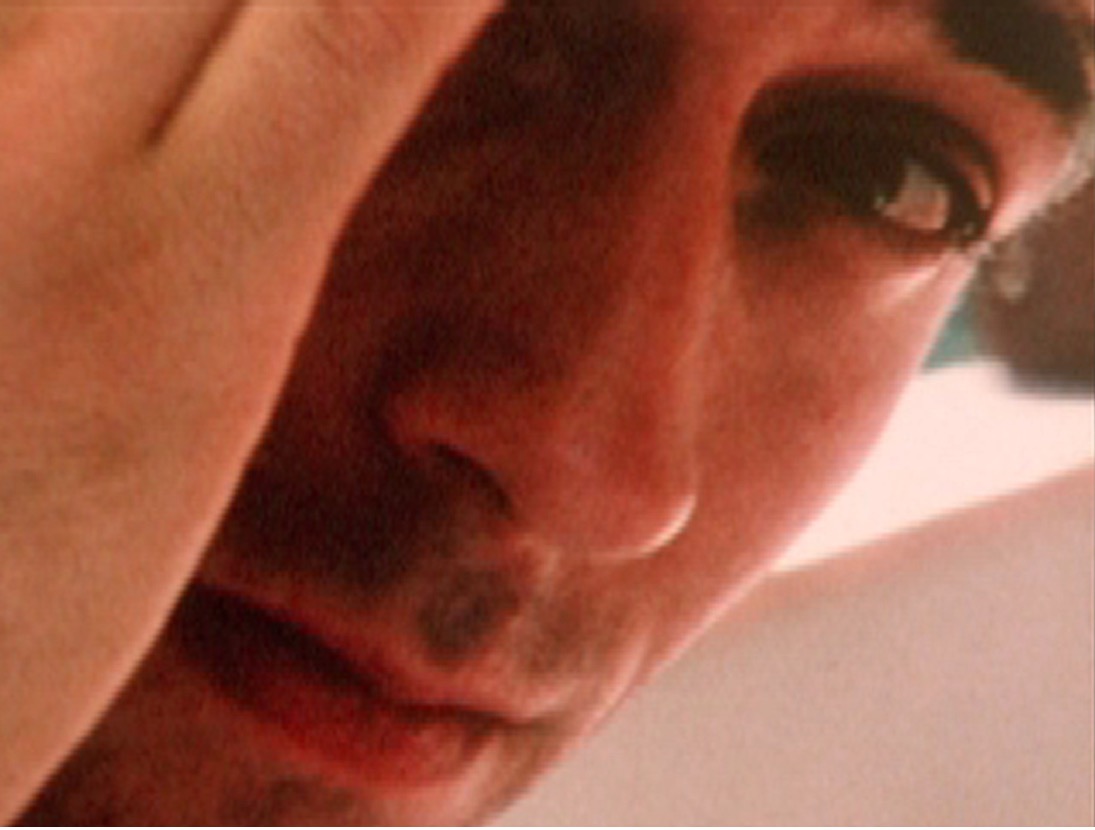
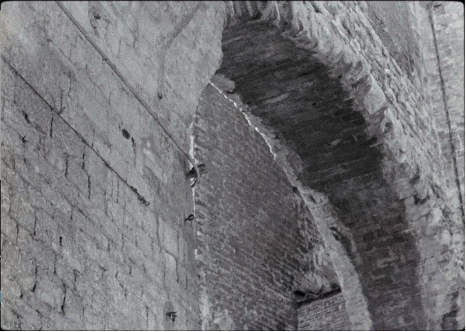
Stills, Darren Birch (left) and Etruscan arch in Perugia (right)
from Anna Thew, Fragments for Eye Drift double screen, Super 8
blown up to 16mm, 2005).
Copyright
Anna Thew. Courtesy of the artist.
Anna Thew:
Well, the start of
Super 8 as a movement in Britain, in London, was to do with Padeluun. It was
completely and directly to do with
Padeluun. Padeluun came over. He’s an incredible character. He’s still very,
very active and he’s doing things about Big Brother (in the Orwellian sense)
and about surveillance. We’re still in touch. As said, he invited me to do a
programme of films at his Counter Film
Festival at Café Mitropa in Goltzstraße, Berlin. At that point I was lent a
Bolex Super 8 camera and some money for stock by George Stamkovski who’d been
James Mackay’s boyfriend but was now bi, and I made Berlin Meine Augen (Berlin My Eyes), as a double screen film. At
that point my double screen and triple screen came, not from any knowledge of
expanded cinema at all. I was working on drawings and on paintings in series at
home, so I took the triptych and diptych in painting to film. The 100ft 16mm
loops in Blurt, were projected onto
two painting stretchers suspended from the ceiling in the London Musicians’
Collective in the 1983 Co-op Summer Show. So expanded, multi-screen work is
directly related to painting and collage works in series.
Nina Danino:
Can you talk more about
Alle Macht der Super Acht from
Berlin?
Anna Thew:
The Super 8 influence
as a movement, came from Alle Macht der
Super Acht, which literally means “All
Power to Super 8”. They had a manifesto. This camera is light. You can hand
hold it. You can run around with it. It’s got time-lapse. It’s got zoom and
it’s got macro and you are free with Super 8! And it only costs you a fiver.
That was as much as a couple of drinks in the pub. You can get that film
processed the next day. If you were using Kodak 40 the processing was included
so you would get your film back the following day (from Holborn). They did this
manifesto and there was a huge Super 8 movement in Germany and France and
Greece (Maria Klonaris and Katerina Thomadaki, yes?) and Japan and Hong Kong
and Australia. The Super 8 thing in London was big when we came back from
Berlin in 1982. I showed Berlin Meine
Augen in Café des Alliés, Centre
Charles Peguy, Leicester Square, and as Split
City Rushes (1982) in Women Live,
I did a performance with it. That was the first time that Super 8 films that we
brought back from Berlin were shown. Jo Comino at the same time was making the
double screen, Spleen.
Nina Danino:
Super 8 was felt to
have a home movie relationship at the Co-op which was founded on 16mm
film-making. James Mackay says that Super 8 wasn’t taken as a serious medium.
Anna Thew:
Well, that was just the
stuffies. That was the problem with that.
Nina Danino:
Some work was in Super
8, and some was not – what was important was whether the work was good, or not.
Anna Thew:
Yes, absolutely. But we
acquired a Super 8 Steenbeck at the Co-op, because of that.
Nina Danino:
Super 8 was shown in
LFMC cinema programmes. It was pretty impossible to edit Super 8 other than
very basically. Super 8 had single frame and vari-speed, which when projected
at 3fps, slowed down the image and created a dreamy effect also often re-filmed
off the wall. Kodak film stock also had beautiful, saturated colours and grain.
I shot Stabat Mater (1990) on Agfa
Super 8. The format leads the aesthetics. It was also a light camera to handle,
and artists used it like a diary film and recorded their own social scenes. It
had single frame, time lapse, vari-speed and most importantly - a macro lens,
and automatic light meter, which could be switched to manual.
Anna Thew:
Yes, and we also had
three GS-1200 Xenon Super 8 state of the art sound projectors with a 50 foot
cinema throw. Cordelia (Swann) unfortunately ought to have a mention somewhere
here, as she started Experimenta at
the London Film Festival with single and multi-screen Super 8 in 1985 and I
showed Sailor Trailer and the Tinkling Laughter of Little Girls (triple
screen, 1984) and then she started Pandaemonium
at the ICA, 1996 and then at Lux, 1998, with Michael Mazière.
Nina Danino:
These conversations are
about subjective inscription through film language as we’ve been saying.
Anna Thew:
The Super 8 thing was
diverse. There was a whole movement, S8
at B2 at B2 Gallery, Met [Metropolitan] Wharf; Women Live (1982) at the LMC [London Musicians’ Collective] and
LFMC; Leicester Super 8 Film Festival (1984 onwards). The Arts Council/Film
Video Umbrella New British Super 8 Film
(1984), with single and multi-screen touring programmes curated by Mike O’ Pray
and Jo Comino; The New Pluralism
(1985) curated by Mike O’Pray and Tina Keane at the Tate, then House Watch and on and on. It’s never
all been documented.
Nina Danino:
Would you say that
Super 8 is a big part of your film-making identity then?
Anna Thew:
Absolutely. Super 8 was
actually being focused by the film-makers who were working at the Co-op. There
was Steve Farrer (Cinema 1980-81), Bruno de Florence (now B de F), Thomas Mutke
aka von Schulemberg (Co-op Directors 1981-85), Roberta Graham and James MacKay
(Cinema 1979-80), Christopher Hughes, Cordelia Swann, Jim Divers and Jo Comino.
There was Marek Budzynski, John Maybury, Cerith Wyn Evans and Plume Tarrant.
Bruno de Florence launched a big Super 8 event in 1982 with performance artist
Charlie P (then Charlie Pig) skinning a rabbit and with a rock band. We programmed a Long Night of Super 8 and an All
Day Super 8 on the Saturday in
the 1982 Summer Show. And with all those other people who I was working with at
the time, when Cordelia (Swann) did the shows at the Salon of 83 and 84 at the
ICA, there was no 16mm. It was
entirely Super 8, slide tape or video. There was a group of people, George
Saxon, myself, who were in each other’s’ films. George played Tom banging his
head against the wall in Hilda was a
Goodlooker (16mm). Gina
Czarnecki, D John Briscoe and I played in Pig
of Hearts (S8 to 16mm, 1993).
Nina Danino:
There were different
experiences of the Co-op in the 1980s and that’s fine.
Anna Thew:
I mean, yes, and that’s
absolutely fine. But what is not really
correct in my view, is this idea that Super 8 was just about John Maybury and
the New Wave invention. That is complete and utter tosh because some of the
biggest influence was Super 8, internationally.
We did have Derek Jarman’s Super 8 films blown up to 16mm from Dark Pictures in Co-op Distribution at
the time (thanks to Berlin ZDF). We had In
the Shadow of the Sun (1981), Home
Movies I and II (1972-77) and TG Psychic Rally in Heaven. The home
movie genre also linked to Anne Rees-Mogg who was terribly, terribly strong.
She was very active at the Co-op. She was Co-op director and chair through the
whole of that period until her death in 1984. We had a Super 8 section in
Distribution with Super 8 films by Stan Brakhage and Helen Chadwick, so there’s
a lot of filling in to be done.
Nina Danino:
The Co-op to me were
the conversations you could have with other film-makers, it was exciting and
engaged as well as critical and this was also after screenings. But some of the
so-called ‘New Romantics’ didn’t
discuss the work, so to me this seemed to miss the purpose of the Co-op.
Anna Thew:
But it wasn’t only
Super 8, you used whatever medium. When you got a grant for 16mm, you used
16mm. I mean, for me, I would swap from one to the other from 1980–2001, but
regarding Super 8, when I showed at
Interfilm in Kino Eiszeit, Berlin; Hamburg Lo-Budget Film Festival and
Super 8 Festival in Holland and France, there were Italian Super 8 film-makers,
Hungarian Super 8 film-makers, Hong Kong Super 8 film-makers. Jo Comino’s
documentary film for Channel 4 was about the use of Super 8 internationally,
and in North Africa and Venezuela, it was for political reasons. There were
also touring programmes of the New
British Super 8 Film (1984). Jo and Michael O’Pray took those all around
the world literally. They went to South America, Venezuela, Brazil, North
America, Hong Kong, Japan, Hungary and so on and so forth.
Nina Danino:
Of course, many artists
used it as a medium. They also transferred enlarged/blew up Super 8 to 16mm on
the optical printer like I did in Stabat
Mater and re-filming. Barbara Meter also talks about this. But we’re
talking about the experience of Super 8 as a movement, as an identity scene for
some artists in the 1980s. You are right is it also post-interpreted
particularly by Mike (Michael) O’Pray, who championed it through his writing
and curating.
Anna Thew:
You used Super 8,
because it was cheap. You used Super 8 as a diary medium rather than 16mm.
Nina Danino:
Is there an aspect of
your film language that you want to pick up on as a final question?
Anna Thew:
Well, my way of editing
and collage and my notions about editing? You said here, “your films are highly
crafted and laboured”. I wouldn’t use the word ‘laboured’ because that goes
against something that I would be trying to do. I work and work and work at
something until it turns out OK, using collage and chance procedures. Some
things you work on for a long time, like Eros
Erosion (1988–1990). Some things, like Terra
Vermin, double screen 16mm (1998), I filmed in an afternoon, assembled and
screened for Flux Projections at Free Radicals, a dance, music and film
season at Riverside Studios, the same week.
Nina Danino:
I was thinking about
16mm and that it’s not easy to make this work, not just the skill it needs but
of having to work at it and of film as a struggle. I don’t mean laboured in a
pejorative sense. On the contrary, I mean it as an intense type of engagement
with film as a language.
Anna Thew:
Ok. No, well, it’s just
that probably it’s not the right choice of word, because if something’s
‘laboured’, it means that it might
have had the spirit worked out of it.
Nina Danino:
I can see how it can be
interpreted like that, although sometimes experimental work can be laboured in
that sense too. It’s in the nature of it that one is discovering these limits.
Anna Thew:
Anyhow, one of the
things I think that is key to my work, is how I’m thinking about editing. I
will go to Hilda and to the idea
about the absurd, the subconscious, the oneiric properties of film, chance
procedures and Dada and the idea of automatic writing, drawing and filming,
which applies to my whole process.
Nina Danino:
The narrative in experimental films such as Eros Erosion composed of short shots and fragments, fleeting images
and come together in a collage in the editing. Perhaps you can say how chance procedures relate to how you edit
or how you film?
Anna Thew:
There’s a piece that I
wrote about my practice. I would very rarely write a script. I would normally
start from drawings, sketches, notes. Collage is there. It’s key. It’s the way
in which I was making drawings, making paintings. Doing collage, collage with
paper, collage with words. This is a practice that started a long time ago,
influenced by graffiti, slogans, peeling walls and torn posters in Rome. You’re
using those things that you’ve learned about and that you believe in. I
believed in the idea of eliciting from the subconscious. Rather like if you
think about Henri Michaux, or about Joan Mirò, or someone who’s making marks
like Jackson Pollock and out of those marks come an image and an idea…that
you’re intuitively accessing your subconscious. In Hilda, as with Eros Erosion, I
would have a plan of what I would film, but I would always film something else
when I was filming. Because I’m filming it myself. I’m seeing through the lens
myself and I’m not giving the camera to somebody else with a list. I can do
whatever I like. I got into the habit of doing a series of drawings and then
those drawings would be shuffled around and then I would decide the order in
which we would film certain scenes. Then you would always film/record/do
something which you hadn’t anticipated doing, like the sailor looking longingly
through the frosted glass at George [Saxon] and John [D Briscoe]’s house. It
was only because when Juan Lastera turned to the glass, he looked so wonderful
that I had to film him touching the glass. There are things that are
constructed, but at the same time there were things that were captured through
the lens, because you were using the camera yourself.
Nina Danino:
That’s something we
have discussed in the other conversations, the difference between handing over
the camera and looking through the camera and how that’s also the difference
between experimental film practices and artists’ moving image.
Anna Thew:
It also secures a
different response from the subject. The guy in Eros Erosion (Toni Dominici) was a boxer. He couldn’t read or write. He was terrifying
in action. I just showed him what I wanted him to do… pounce on Lisabetta’s
lover Lorenzo and kill him – and he (Toni) was much better at it, than if I’d
have tried to demonstrate. He looked fiercely straight into the camera. You’re
behind the camera. You’re talking to him, so he looks at you through the lens.
I never forget when Eros Erosion was
first premiered by the BFI in the Metro Cinema, off Leicester Square. People
were being a bit funny because it had had a bad review from Geoff Andrews in Time Out. When my film came on there
were people in the audience muttering, “Oh, this is the arty auteur film with the portraits that he
says you shouldn’t like.” Then, when the stunning boxer, Toni Dominici comes up
and he turns towards the camera and blows smoke through his nose, the whole
place went quiet. What a find! I don’t think you can imagine or get an image
like that if you ask a cameraman to
do that. You’ve only got that because there’s a relationship with the
film-maker, camera person/woman and the subject.
Nina Danino:
Do you think that this
moment where there is a connection with the viewer can only happen when the
film-maker is behind the camera?
Anna Thew:
Yes. There’s something
about observing through the camera
lens… when you look at people and people look at you at me as the woman,
the personality that I am. You actually capture their glance through the
camera. You see it in Anne’s films, in George’s films, in Derek’s films, in
Warhol, in Brakhage, in Schneeman, in Robert Cappa, in Victoria Mayer, in
Pasolini. Pasolini used this phenomenon in Oedipus
Rex (1967). He has a second camera and hand holds it… with Jocasta and
Edipo, cross cut, eye to eye, in POV (Point of View), “I killed my Father!”, straight into the camera, straight at you. Not, “I slept with my Mother…”, but the critical irreversible destiny
bit, “I killed my FATHER!”.
Nina Danino:
Pasolini worked with a
cameraman and big crews. To see him sitting pensively in a big production like
a director. He was not an experimental filmmaker as such.
Anna Thew:
He used POV in Oedipus Rex. It’s not just a fake point
of view. You’re not having somebody looking out over here. It’s not somebody
like Michael Caine looking with one eye at the camera and one eye at the
director, as Caine explained in a documentary, but you’re just looking through
the lens. That’s also why you have difficulty with a video camera. The video
camera has a little flap at the side, so they’re not looking through the lens
anymore, they’re looking slightly to the side. This, direct personal relationship,
is like somebody you know. I will never forget seeing Derek Jarman’s B2 Movie at the Co-op Summer Show 1982.
Jean-Marc Prouveur, whom I later got to know very well, is slowed down. He
looks into the camera at you and you
see his eyelashes moving up and then he looks away. You felt that this was
somebody you knew, because he’s looking straight into the camera at Derek, now
at you, at me… I think that’s
something that’s very powerful. Think of Window
Water Baby Moving (1962) where Jane takes the Bolex and films Brakhage seeing the birth, the instance…
Nina Danino:
The actor looking at
the camera and appearing to connect with the viewer could be a rhetoric of
connection, like with slow-motion where the movement is magnified. These
effects can be overused not just in Super 8, but special FX in post-production
that became available to artists, could they be clichés – at-hand languages?
Anna Thew:
I don’t think they’re cliché. This is not a cliché.
Nina Danino:
How do you distinguish
between when it is a cliché or a moment where the look is active and conveys
something that doesn’t have words? How do you know what distinguishes the use
of slow motion or other special FX from a cliché?
Anna Thew:
I think there are very,
very big similarities in the way that the work was happening in the little
group that we belonged to.
Nina Danino:
The practice of ‘coming
out’ was a big part of the 1980s. You say that “in the ‘coming-out’ films of
Steve [Farrer] and Jeanette Iljon, there had to be
the gay subject and camp, obviously so, with dressing up, using dancers or
performers”.
Anna Thew:
I think there’s a
confusion about the idea, about camp and gay, because to me it was just
something where we’re theatrical. I think there’s something that is very much
misunderstood about the dynamic at that time.
Nina Danino:
What do you feel has
been misunderstood? There was a feminist critique of how women are marginalised
by parts of gay subcultures which parodied women. But the way that this scene
worked at the LFMC is that perhaps that it offered an exit from the austerity
of structural film, flamboyance was perhaps a sort of way out, a reaction.
Anna Thew:
You have to understand,
that say when in Split City Rushes,
which became Berlin Meine Augen (1982),
I sang in front of the film, but when we did it at the Summer Show, we cut a
hole in the (Co-op) ceiling and I was lowered in front of the film on a rope,
with little blue boots and red leopard-skin tights. I’m not gay but the people
who liked that performance most of all, were people like Bruno de Florence and
Thomas (Mutke) and big Steve. They adored those types of things. They might
have liked what they considered to be camp in what you do. Just being “near to the theatre” was something that
I and my Mother always liked.
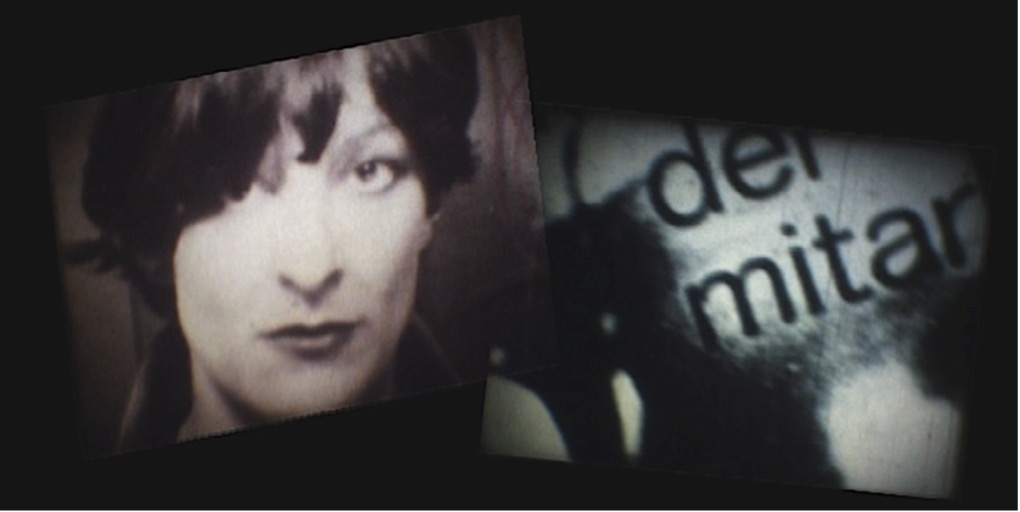
Still
of Anna Thew and Filme
der Mitarbeiter catalogue from Anna Thew, Berlin Meine Augen (double screen, Super 8, 1982).
Copyright
Anna Thew. Courtesy of the artist.
Nina Danino:
Camp is over theatrical
and is it problematic if it veers into pantomime? I see excess as something
different. The ‘feminine’ which is in ‘excess’ is something that cannot in fact
be represented. It exceeds representation in symbolic language, so it is a
different direction. The Super 8 scene connected to extravagance that’s far
away from the inscription and the subjective that we are talking about. Perhaps
we can look more for inscription in your solo self in the 16mm films.
Anna Thew:
I’m not sure… Well, I
did love Kenneth Anger’s Fireworks (1947). There’s no doubt about the sailor in Hilda, Juan Lastera being gay, or
undecided. I’m making a direct reference to Kenneth Anger, because I swap their
hats. One of them has an American sailor’s hat in one scene, which is then
swapped for a British Navy hat.
Nina Danino:
In Fassbinder’s Querelle?
Anna Thew:
Oh, Querelle? I hate Querelle for its suffocating hyper-bourgeois mise en scène and actually Jean Genet refused ever to have any of
his novels used for film, after that film.
Nina Danino:
Un Chant d’Amour (1950) in
distribution at the Co-op. It was so often programmed and shown there that you
said that he made quite a bit of money from the film, and you paid him
royalties directly to his Paris address. That’s quite amusing to think of that
today when it has become such an icon of avant-garde cinema.
Anna Thew:
I only knew who Jean
Genet was because my Mother introduced me to The Journal of a Thief (1949), which she considered to be a
masterpiece, but backed it in brown paper so Daddy wouldn't know what she was
reading, like the Kama Sutra and Lady Chatterley’s Lover (1928). I think
she was explaining to me, “I know it’s really naughty to actually really like
this, but you see…” and she said, “I suppose women look at men, like gay men
do,” and this is what she was saying.
Nina Danino:
You say, “We were beyond feminism” and describe yourself as “an androgen tomboy”. Can you say more about this?
Anna Thew:
Not like gay men, but that women look at
men… they’re desirous of men, like gay men are, no more. We had Un Chant d’Amour in Distribution and the
dynamic at the Co-op at that time was gay and ‘polymorphous’. Steve was gay and
Jeanette Iljon was a lesbian. Mick Kidd (BIFF) was into the Co-op and loving
everybody. George was gay or bi. It was Steve who started up the Women Only screenings, not Jeanette. He
made it possible. Many of the women who were part of Co-Option, Channel 4 mega
funded women’s only project, became very badly behaved and tried to take over
the Co-op and cut men out. Thomas and Bruno organised the first Gay and Lesbian
Festival at the Co-op in 1981. We were all involved, as they
were with the first Distribution Preview Shows and the Summer Shows (1981/2).
This was very typical of the time, like in Isaac Julien’s film Young Soul Rebels (1991) and he’s
telling a story of his childhood. There were three/four friends at school, a
straight guy, a gay guy and two girls, and they were all really great friends.
It was only when they get into the outside world, that separations begin to be
unnaturally forced on them.
Nina Danino:
Do you
think your films are also a record of this scene, people, artists from the gay
subculture of the eighties including Derek Jarman and others?
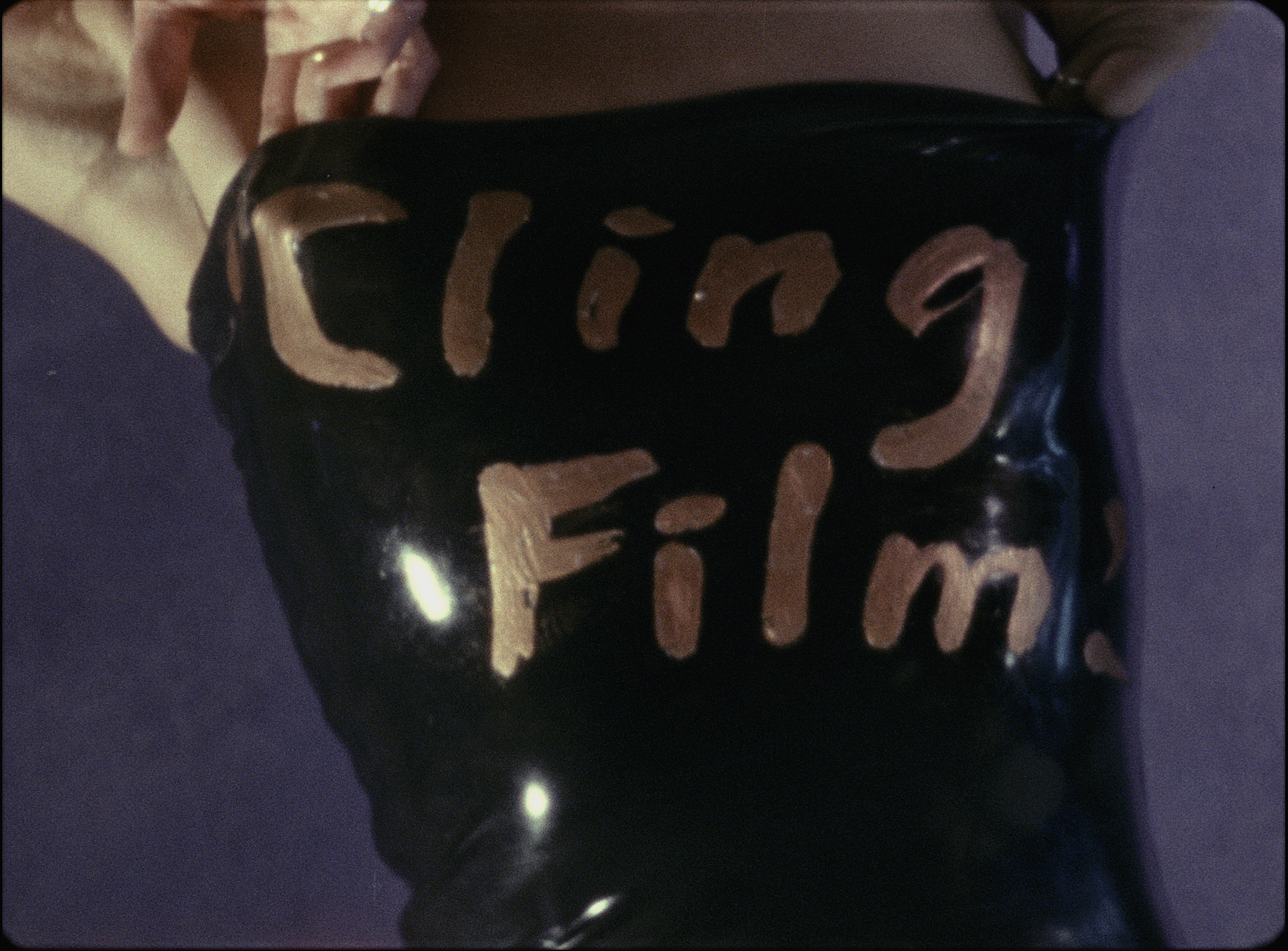
Still
from Anna Thew, Cling Film (1993).
Copyright
Anna Thew. Courtesy of the artist.
Anna Thew:
We had the Thompson
Twins playing. We had parties. We went clubbing. We were very naughty. There
was the first gay and lesbian festival in 1981 and September in the Pink in 1983. When Thomas (Mutke) was running The
Fridge night club and Daisy Chain in
Brixton, he used to give us money to do 16mm loops. Thomas and Bruno did Network 21, Pirate TV. They did the
first Scratch Video shows at the ICA, the first multi monitor Video Lounge and the first video wall at
the Fridge night club. Some of my films, like Cling Film (1993) were shown on the Fridge video wall for weeks.
Nina Danino:
Yes, the
Super 8 scene was connected to venues outside the LFMC. There were nights and
events. There was a group around Derek Jarman and B2 at Metropolitan Wharf.
Were you involved in that grouping around Jarman? He had a cameo in your film Behind Closed Doors (1988), did you have
cameos in other films? Perhaps this is a form of inscription in a collaborative
group.
Anna Thew:
Well, I would say that
a film like Berlin Meine Augen, first
shown as a (double screen) film at S8
at B2 and my performance of Split City Rushes (1982), set off a thing or two about
multi-screen 16mm, Super 8, and performance with film. There are a few things
that I’ve done, that have sparked other people to do. I think some of George’s
early performative films like Wall
Support (1977), which he made when he was at the Royal College, where he
just bangs his head against the wall for 10 minutes, had the same effect on me,
so George was the obvious candidate to play Tom, who bangs his head against the
wall in Hilda. Steve, George and I
were the Three Musketeers.
Nina Danino:
Would you like to talk
as a solo film-maker about your narrative in experimental films using 16mm? Eros Erosion and Hilda was a Goodlooker?
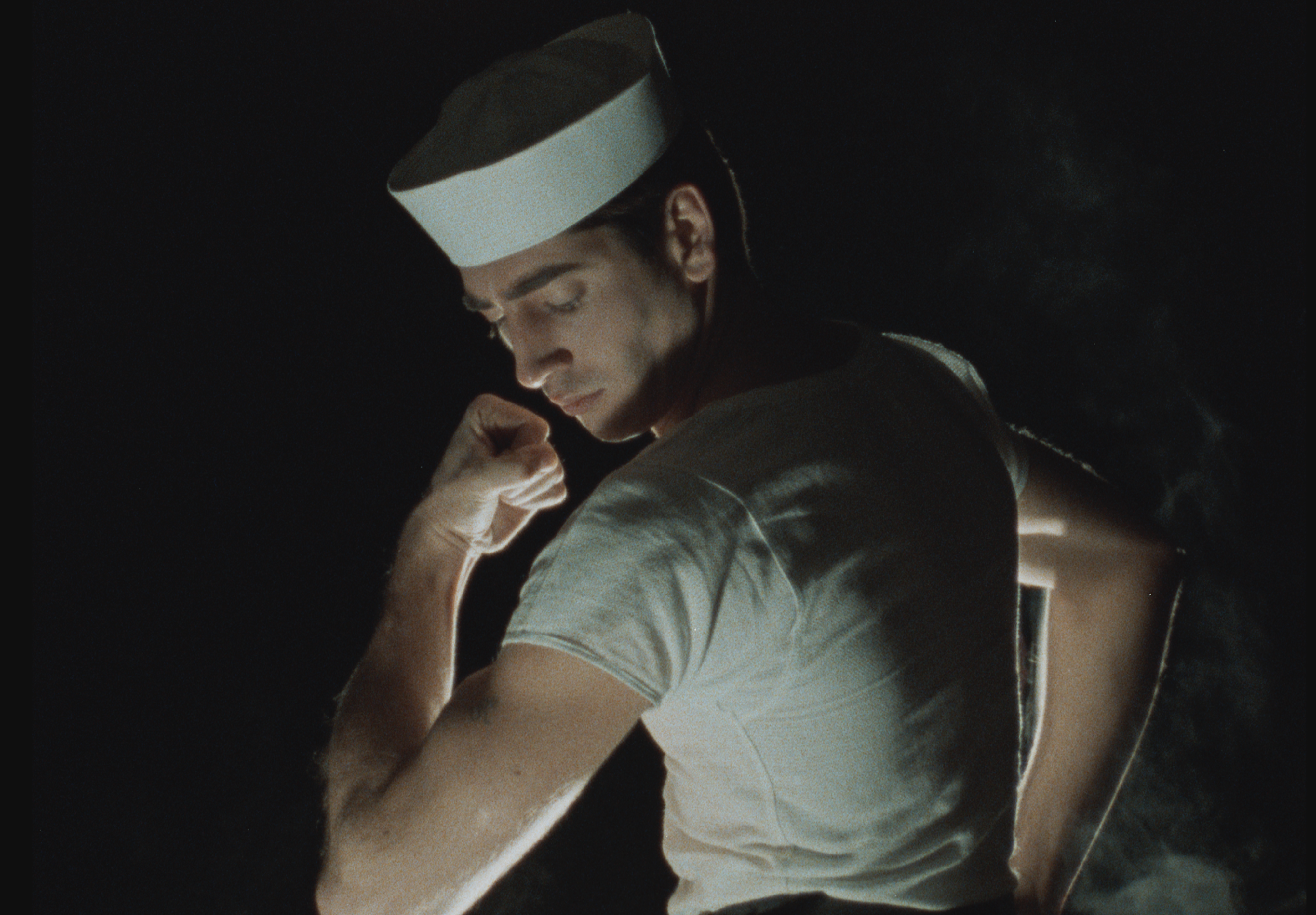
Still
of Juan Lastera as Billy the sailor in Anna Thew, Hilda was a Goodlooker (1986).
Anna Thew:
It was all supposed to
be very mixed up and deconstructed. George was in my film and he’s dressing up.
Then I’m in his film and I dress up, but was George influenced by me making
those films, or me by him? I’m coming slightly from German (Brechtian) theatre.
I’m into Garcia Lorca. We dress up. That’s the difference, the dressing up.
There is something which connects our theatrical
films to the films of somebody like Jack Smith, or Kenneth Anger, Maya Deren,
or Manuel de Landa’s The Libidinal
Economy of Filmus Interruptus (1980),
or the kind of scene in American cinema that you get very little of in the
British, rather reformative avant-garde. So there was this helping of each
other. I think that more than our filmmaking, or at least my film-making, when
it’s got more than one person in it, it’s a collective effort. You have
somebody suggesting that you do something in a certain way when you’re filming.
So somebody might suggest, “If you do it like this… ” There was a really,
really active group of people, who actually supported each other’s work, and I
would say someone like Nick Gordon-Smith, like Carole Enahoro. The people who
were working at the Co-op and making films, like Alia Syed’s early work, trying
to use words, trying to use sound, trying to use text.
Nina Danino:
Your multi-media
expanded work like Blurt (1983) and On Leonardo (1977) hovered between
experimental theatre, super 8, performance and live events, which differed from
structural expanded film. There was the structuralist work still going on at
the LFMC in the 1980s.
Anna Thew:
Yes, but at
that time, it (structuralist work) was really quite secondary, frankly. BLURT was about words, that as Leonardo da
Vinci said, language cannot be
universal. Marcel Duchamp said, “Language is no damned good. It has to be
translated from one to another.” For the Blurt
video, I was reading all male texts in six different languages, (two that I
don’t know), untranslated and changing my hair style and clothes and delivery
for each language and text. It was a comment on talking head videos and
reparative voice over, on film. This video was on two monitors kicked on their
sides on the floor. There was a colour film with superimpositions of blabbing
lip-sticked mouths. Yes, straight men with lip-sticked mouths too, on one
screen and language in all forms, handwritten, wood block printed, Gothic
script in rhythmic patterns using varied factors of 24, so you would never tire
of watching it though you couldn’t understand a word. Word as image in black
and white. But if you don’t understand, you fall out. I trained to weave (a boxing term) at the Tabernacle
with a black heavy weight boxer and kids in stitches all around, with me in red
silk Lonsdale boxing shorts and I terrified my drag queen friend Charlie P with
my convincing movements… and in Osnabrück (Experimental
Film Workshop, 1987), it was re-staged with Padeluun and then with Caspar
Stracke and me and Lukas Schmied doing the fox trot. So deadly earnest, but
absurd.
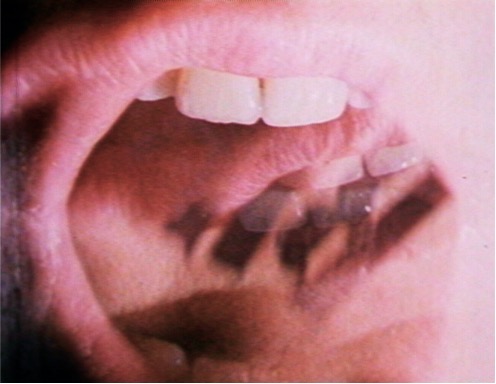
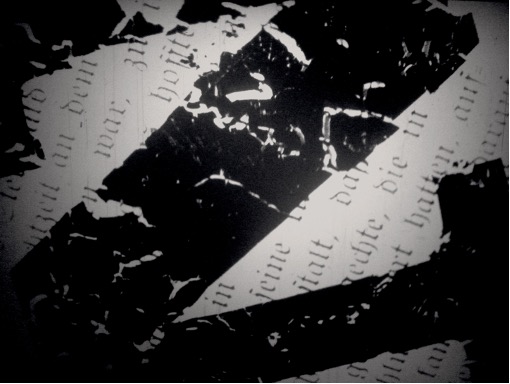
Stills
from Anna thew, BLURT (double screen,
16mm, with live performance, 1983).
Copyright
Anna Thew. Courtesy of the artist.
Nina Danino:
It (structuralism) did
remain in place at the Co-op.
Anna Thew:
It’s definitely very
much to do with the kind of religion that we had in Britain. It goes right back
to how Voltaire thought it was terribly funny when they had the Quakers and
everybody was wearing grey and they all trembled. This idea about people wearing
grey and the lack of the use of colour.
Nina Danino:
There were also strands
which came from the formal rigour of structural film, but which then combined
with personal and subjective forms of elliptical narrative.
Anna Thew:
Well, as far as I know,
there was Peter Gidal… he was all structuralist and at Chelsea we had two of
the master structuralists. Chris Welsby was a student of Anne’s at Chelsea and
Renny Croft. Richard Welsby and Jenny Okun, also. But in the eighties, structuralism
was no longer dominant.
Nina Danino:
Yes, it was a reaction
against structural film, possibly also anti-theory?
Anna Thew:
What do you mean?
Nina Danino:
Outside of the LFMC it
connected to the music around MTV and associated with that industry.
Anna Thew:
I’m not sure that I
agree with your comment on “that industry”.
Nina Danino:
I wasn’t part of that
scene, although I did show in festivals such as Pandaemonium (1996).
Anna Thew:
Tell me which pieces
you’re thinking about.
Nina Danino:
I’m not talking about
individual pieces.
Anna Thew:
What work are you
talking about? Give me some names, some titles.
Nina Danino:
As I said, it’s not
about individual works because they were very seductive. I remember fragments.
That’s the point. It was a sort of genre.
Anna Thew:
I think that Richard
Heslop’s work is quite remarkable, and he worked with [the band] 23 Skidoo. If
you look again at some of John Maybury’s early work that went into the BFI This is Now, Film and Video after Punk (1978–1985)
touring programme, it’s extraordinary. There’s a beautiful piece of his, full
of nuance and meaning, conveyed visually, not reliant on word.
Nina Danino:
Yes, Nick Gordon
Smith’s Sermon (1988) had wonderful colours made on the
optical printer. But we’re talking about authorship and inscription, not as a
group, but mainly a solitary activity.
Anna Thew:
I don’t agree that just because something is visual, that
it’s sensual.
Nina Danino:
No, I didn’t say it
wasn’t. I like sensual work. Seduction is something different.
Anna Thew:
What you’re talking
about wasn’t Co-op work. That was coming from the not
just gay club scene.
Nina Danino:
Perhaps you need to
tell that the story, because you were more part of it. Mike O’Pray dubbed this
movement The New Romantics and
championed it through London Film and Video Umbrella touring programmes and The Elusive Sign (1987) screenings at
the Tate. Michael Mazière as well in Pandaemonium.
Anna Thew:
Yes, but Mike O’Pray’s
the person who switched over from landscape film to New Wave Super 8 in five minutes! Read Michael Mazière and my
critiques of The Elusive Sign in Independent Media magazine (c.1987). It eluded, rather excluded five years of Arts Council funded work, Co-op film-makers’
work, women film-makers’ work, black film-makers’ work. Lis Rhodes and Tina
[Keane] were the only women featured.
I did a cartoon of the selection process by the triumvirate, David Curtis (from
the Arts Council), Mike O’Pray and Al Rees (from the Royal College of Art), and
there was a protest with a manifesto for the launch at the Clore (Auditorium)
at the Tate (now Tate Britain).
Nina Danino:
Yes, that’s right we
did the Landscape double issue of Undercut.
Mike O’Pray was central in presenting and validating the work critically. There
was beginning to be a shift to curators, but Mike was a film scholar. Mike must
have seen that the avant-garde was fracturing. He also curated the show The New Pluralism (1985) at the Tate
with Tina Keane.
Anna Thew:
Yes, I was in that show
at the Tate (Sailor Trailer, Super 8,
triple screen). I think The New Romantics
as a label, is really sick. I never really had very much time for that title.
Nina Danino:
Mike also curated Synchronisation of the Senses at the
ICA. He invented and brought it all together as a movement.
Anna Thew:
And they used to slap
Mahler’s Das Lied von der Erde, or Kinder Toten Lieder on, or Wagner, and
we used to make fun of it. I mean, there’s no way you could clear the
copyright, like Douglas Gordon having to recompose the Vertigo music for his Hitchcock plagiarisation.
Nina Danino:
It was widely toured,
programmed and promoted and it had a very good writer in Mike O’Pray so it
doesn’t need to be defended because it was highly visible and had backing. I’m
interested in what didn’t fit into this trend was in a way about the subjective,
which wasn’t written about.
Anna Thew:
I think when you’re
trying to do an analysis of somebody’s work, or a group of people’s work,
sometimes it’s rather complicated, if you haven’t seen the work and the
activity, internationally, like say Rosa von Praunheim’s film, Ich bin meine eigene Frau [I Am My Own
Woman] (1993) featuring Charlotte von Mahsdorf, or Yann Beauvais’s SID A IDS (1992), or Wilhelm Hein’s film with Ichgola Androgyn as a mermaid in a
pond making love to a pair of false teeth, referencing the opening scene in
Jack Smith’s Normal Love (1963), or
the Super 8 documents of the performances of Michel Journiac, who trained as a
priest, Messe pour un Corps [Mass for
a body] (1969), or the work of Harun Farocki.
Nina Danino:
Yes, I agree there are
so many overlaps. But can we talk about your 16mm work? For me the story about
the piano is really at the centre, also what you’ve said about dressing up and
how you talk about the subconscious in your method of editing and looking
through the camera. There are many insights into film as a visual language.
Anna Thew:
That was the end of it,
if you look at it very carefully. But we couldn’t just stay in the same place.
Nina Danino:
The problem was that
the space for collectives then closed down. The commercial gallery world became
dominant in Britain with the YBAs (Young British Artists) and the art markets
around 1988. That work really then lost contact with looking and making, with
the subject. Popular culture and conceptual work became more important. The
Super 8 scene was itself overtaken by digital media and the concept of artists’
moving image, which linked to a new super commodification. Compared to this,
the Super 8 scene still had the vestiges of the subject – nevertheless a
subject overwhelmed by ‘abstract subjectivism’ as Paul Wallace puts it. Anna,
can I ask you then the last question, about being ‘a woman with a movie
camera’, or how has ‘a camera of one’s own’ been important to you? Do you want
to choose one of those?
Anna Thew:
A “camera of one’s own” is good, because I’ve got two or three
(cameras).
Nina Danino:
OK, choose that one.
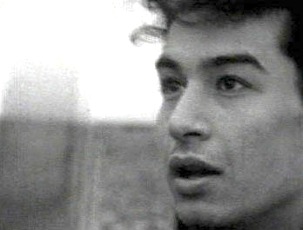
Stills
(from left to right) of George Saxon, Steve Farrer’s rotating 35mm Machine and
Cristiano Campus (Gambee Isterix) from Anna Thew, Machine Parts and Portraits – Broken Pieces for the Co-operative (multi-screen, 1988–2001).
Copyright
Anna Thew. Courtesy of the artist.
Anna Thew:
I mean, I had a big
fight to do my own camera when it came to getting the funding released for Eros Erosion (1990), which was with a
BFI New Director’s grant. I had to persuade Ben Gibson there was no way that I
could have somebody else filming for
me, because I film better than they do. I’m a moving camera person. I like filming. I can get performances out
of people that others can’t, when I’m filming in this way. I do mise en scène. I light. I make sound. I
edit. I colour grade. I do everything, but not without help. I do have people supporting me, popping in
and out, like when the sound was done for Cling
Film (1993). I had a great
friend, Andy Cowton, who was with Test Department (band). He did these tracks for me that were the length of a piece
of film, a scene. I had to say, “Sorry, I can’t work this way.” I was into
[John] Cage, [Merce] Cunningham, [Isamu] Noguchi and “Chance, chance, chance…” Then I met avant-garde musicians
IDENTICAL, Gavin Mitchell, Orlando Harrison and Stephen Thrower who used to be
with COIL, at Franko B’s, and we
started talking about sound and sound recording. I told them how I’d climbed
out over the girders of a Thames bridge to get a particular kind of echo on a
voice over the water. They’d done also various kinds of very adventurous sound
recordings. I described the film and the sounds and they sent me this cassette
tape of them jamming in Orlando’s front room. It’s amazing that that’s the
music we ended up using… from a cassette! They came along to the edit and they
would sit there and I’d say, “Do you mind if I transfer this bit of sound of
yours in reverse, or shuffle it around?”, “Oh no, no, brilliant!” So, we were
actually suggesting and working like a group of musicians, or sound image
makers. I think that’s the difference between somebody like Malcolm Le Grice,
or Peter Gidal, or Nicky Hamlyn, or Guy Sherwin making a film, where they don’t
have to have people, and that’s it.
Nina Danino:
A camera of one’s own
gives you independence.
Anna Thew:
Cling Film was a collective action. There’s no way
that anyone can make a film like that on their own. If you look at Fassbinder’s
films, there’s no way Fassbinder, on his own, could make any of those films, or
that Brecht could’ve done any of his plays without the whole troupe of people.
Nina Danino:
You fought to find new
premises [in 1990/91] and not let the LFMC and its culture close down in
2000/01 when Lux (an amalgamation of the LFMC and
London Electronic Arts, LEA, formerly London Video Arts/Access) went
into liquidation. These conversations are a way of revisiting and
reconstructing what you call “this haven of practice” with
reference to the loss of space when that iteration of Lux closed, but also when
the former Gloucester Avenue site in Camden was demolished and you made Broken Pieces for the Co-operative (double
screen, 2000/1) and LFMC Demolition
(2004). These refer to how the Co-op sublet and shared the British Rail
building in Gloucester Avenue with the London Musicians’ Collective (LMC, 1977
until 1988) and LFMC Demolition
features sound recordings by LMC founder members, your own recordings of
railway sounds along with sounds by IDENTICAL, Stephen Thrower, Orlando
Harrison, Gavin Mitchell, Len Lye and beat poet Carlyle Reedy. How did you feel about making that film? Let’s say we’ve
also discussed the LFMC as feminist space and a (maternal)
space/structure of inscription, the open access collective structure of the Co-op
as a haven for women, for a woman with a movie camera. It’s a great
interpretation of the structure – although some people found the LFMC
intimidating too.
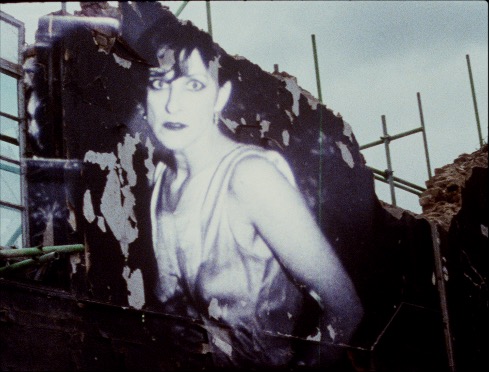
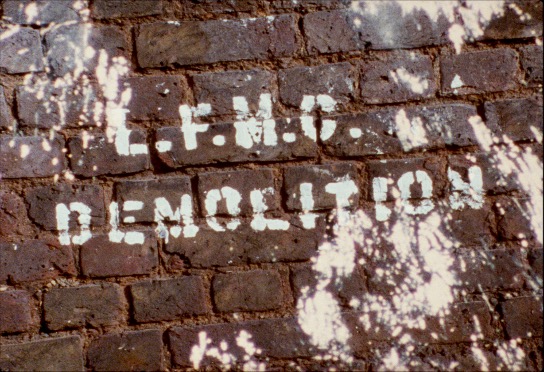
Stills
from Anna Thew, LFMC Demolition – Broken
Pieces for the Co-op (double screen, 16mm, 2001).
Copyright
Anna Thew. Courtesy of the artist.
Anna Thew:
Yes, we
fought to save the London Film-makers’ Co-op, irrespective of race, gender, sexual identity, class.
Annabel Nicholson, Nick Collins, and I were on the Executive/Cinema and
Building Committees with Steve Farrer, Patrick Keiller, Ilios Pantos (both
architects) and Martin Lugg (civil engineer), joined (in action) between 1999
and 2001 by Black Audio Film Collective, Sankofa, Cinema Action, LVA/LEA
(London Video Access, formerly London Video Arts, latterly London Electronic
Arts) and with young artists, Franko B, James Hutchinson, Paul Rogers on the
Co-op Executive. It was the beginning of the end of collectives and the BFI,
Arts Council and GLA (Greater London Council) arts funding of co-operative
spaces – a seismic shift. It is too long and tragic a story to tell here. We
found a wonderful practical building in Saffron Hill with lift and fire escape,
round the corner from Farringdon Tube, within walking distance late at night to
Tottenham Court Road. The BFI Regional Development Fund, and then non film-maker, non artist admin at the LFMC were mis-guided by corrupt property
consultants, RCA, at huge cost, to accept an impossible building, the
old hat factory, Dunn & Co. in Kentish Town, which would have cost a tidy
half a million to convert. It was a scandal. I wrote about it in Independent Media editorial, ‘A Letter!’
(1991). There was a rift. We pulled our films out of Distribution. The débacle
spelled the equally corrupt final demise of the Film Co-op in 1999 (as a
registered charity by forced withdrawal of BFI annual funding), and the financial
liquidation of the newly formed Arts Council funded/LEA amalgamated ‘Lux’ in
Hoxton in less than one financial year, in 2001, saw the hierarchical
administrative takeover of the LFMC Distribution Archive, the film collection,
in my view, an institutional scam, the loss of the Workshop, the Cinema and the
open access Distribution, the entities most cherished by the creative ‘makers’.
We lost control of our wares and our creative freedom and co-operative
independence to the property market, the construction industry and the commercial
gallery takeover. We lost a Cinema of our own.
Nina Danino:
Yes, but it’s always in
relation to the collaborative, in relation to others.
Anna Thew:
Yeah, yes. So it’s like
you’re with a troupe. Like in the theatre, you can’t have a theatre piece
without anybody acting and you can’t have music unless you’ve got people
playing the instruments and you can’t have our kind of film without a camera
and a screening space.
Nina Danino:
But in a way we have
also ended with you playing the piano and doing your own camera, as yourself,
solo, you, looking through it yourself. Thank you.
[end of zoom recorded material]
_____________________________________________________
Biographies
Anna
Thew, linguist, painter, writer, turned film-maker, performer, studied F.A.
Painting at Chelsea School of Art (1974–78), Italian Studies and German at
Manchester University (1968–72), working with the LFMC Distribution Archive in
the 1980s and co-curating FLUX projections (1994–2025). Her works have shown
widely in international film festivals including, Berlin, London, Edinburgh,
Rotterdam, Locarno, Sydney, Kiev and NY; in galleries, XCentric Cinema, CCCB,
Barcelona (2017); Weaving Time, Tate
Britain; Real to Reel, Tate Modern
(2016); Intersections, New Art
Projects (2015); Palazzo Visconti, Milan (2014); Galleria Pack, Milan; Lipanje
Puntin, Rome; Frieze, London (2005); Mot:
Dites, Image, Centre Georges Pompidou, Paris (1988), and Charting Time, Serpentine Gallery,
London (1986), with solo shows including; Kino Armata, Prishtina, Kosovo
(2022); M.S. Stubnitz, Amsterdam (2005); MM Centar, Zagreb (2002); Villa
Capriglio, Torino (2000); Anna Thew –
Retro-prospective, Lux Cinema, London (1999); and tours including: This Is Now, Film and Video after Punk
(2015/16); with commissions from the Arts Council, BFI, Channel 4, La Sept Arte
and the first Montez Press Artist's Publication Award (2017). She worked as
Associate Lecturer in F.A. Film/Alternative Media and Visual Arts at Central
Saint Martins, Chelsea College of Art, Goldsmiths and Westminster universities,
and ran the Chelsea Experimental Film seminar screenings series (1984–2016).
Nina Danino was born in Gibraltar. She is a Reader in Fine Art at Goldsmiths, University of London. She studied Painting at St. Martin’s School of Art and Environmental Media at the Royal College of Art, London. She was a member of the London Film Makers’ Co-operative in the 1980s, a member of the editorial collective of Undercut: The Journal of the London Film-makers’ Co-operative (1981-1990) and co-editor of The Undercut Reader (Columbia University Press, 2003). Her films have been shown worldwide and premiered at film festivals and broadcast on television and a retrospective of her work took place at Close Up Cinema, London in 2016. MARIA (2023) is her fifth feature-length film. Her soundtracks feature vocals, singing, readings, narration and music in her own voice and in collaboration with singers and musicians. Her recent work crosses into stand-alone audio, live performance and studio recording.
_____________________________________________________
Select Bibliography
Beauvais, Yann. 2006. “Comme un air, ou le cinéma d’Anna Thew,” Yann Beauvais ecrits, June, accessed 9 February 2025. https://yannbeauvais.com/?p=198. “Like a Song [Translation by Philippa Langlois],” Luxonline, 2006, accessed 9 February 2025. https://luxonline.org.uk/artists/anna_thew/essay(1).html
Close Up Film Centre. 2024. “Flux at the
Minema 1994 / 2024 [7–14 December 2024],” Close Up programmes, accessed 9
February 2025.
https://www.closeupfilmcentre.com/film_programmes/2024/flux-at-the-minema-1994-2024/.
Danino, Nina. 2003. The Intense Subject.
In The Undercut Reader: Critical Writings
on Artists’ Film and Video, 8–12. Wallflower.
De Witt, Helen. 1999. Anna Thew Films –
A Retrospective. In Anna Thew
Retrospective [programme] (July). The Lux Centre.
Della Casa, Stefano. 2000. English Film-maker Anna Thew – Two Evenings at the Villa Il' Capriglio [review]. LA STAMPA [newspaper] (21 July).
Fowler William, Mackay,
James and Thew, Anna (2016).
Even Malcolm Became A Feminist, Part II – The Renegades. SALT. #7 – Heterophobia.
Montez Press catalogue, accessed 9
February 2025.
https://www.montezpress.com/catalogue/salt/heterophobia.
hooks, bell. 1996. Cling Film by Anna
Thew [live presentation, unpublished], Museum of Moving Image, BFI Southbank
(now NFT 3), London, (Autumn).
Jacquin, Maud (curator), LUX
and Tate Film. 2016. “From Reel to Real: Women, Feminism and the London
Film-makers’ Co-operative (Tate Modern), 19, 23–25 September,” Tate Film, accessed 9 February 2025.
https://www.tate.org.uk/whats-on/tate-modern/film/reel-real-women-feminism-and-london-film-makers-co-operative.
Kurtagic, Emina. 1997. A Matter of Life
and Death. In Anna Thew – A Retrospective
[programme catalogue]. Split International Film Festival (October).
Lawson, Deborah. 1995. Sexual
Grace – Body Positive. In Anna Thew’s
Cling Film with Derek Jarman's Angelic Conversation [catalogue]. City
Gallery, Wellington, New Zealand.
Mazière, Michael. 1988. Illuminated.
Independent Media, No.75 (March).
Nadal, Laia. 2022. ‘Autumn Rush for Kurt
Kren and Winter and Spring and Summer’ (2003) dir. Anna Thew. Ultra Dogme, 8 March, accessed 15 April
2025.
https://ultradogme.com/2022/03/08/autumn-rush/.
Stoneman, Rod. 1996. Anna Thew. In Curtis, David
(ed.) A Directory of British Film
and Video Artists, 194–195. Arts Council of England.
Thew, Anna. 2024. Reflections on Mare’s Tail [essay, sleeve publication]. In Moore,
Anthony. Mare’s Tail: From the Film by
David Larcher [album]. Bandcamp,
accessed 15 April 2025.
https://anthonymoore1.bandcamp.com/album/mares-tail.
Thew, Anna. 2024. Experimental
Film-making. In Froy, Claire (ed.) The
Spaces Between – Richard Welsby Selected works 1972-2022 [catalogue]. The
Pier Arts Centre, Orkney, 2024.
Thew, Anna. 2024. What I meant to say
was…. In Chan, Wing and Morris, David (eds.) Precarious Solidarities, Artists for Democracy 1974-77. Afterall.
Thew, Anna. 2021. A Train in the Night
Passing (Schrift for the Liberated Nacht). In Schtinter, Stanley (ed.) The Liberated Film Club, Tenement Press #2.
Tenement Press. “Tenement Press – Liberty,” accessed 9 February 2025.
https://tenementpress.com/Liberty.
Thew, Anna. 2019. Anna Thew – Lost for
Words. RAB-RAB magazine, Boynik,
Sezgin (ed.) (Issue 5). “Rab Rab Press, Rab-Rab Journal # 5,” accessed 9
February 2025.
https://www.rabrab.net/shop/p/rab-rab-journal-6-b4bek-mndn6.
Thew, Anna. 2002. By Way Of
An Elegy – On Sandra Lahire's Uranium Films. FILM WAVES magazine.
Thew Anna. 2001. Curating
Cultural Imperialism or Vibrant Moving Image Culture? VERTIGO magazine (Spring).
Thew Anna. 2001. Film's
Lascivious Surface – Film is the Future. FILM
WAVES magazine (Issue 14, Spring).
Thew,
Anna. 1998. A Profile: David Larcher. EYEBALL
magazine (Issue No.5, Spring).
Thew, Anna. 1998. As The Mainstream
Flicks the Underground Flickers. EYEBALL
magazine (Issue No.5, Spring). Republished in Thrower, Stephen Edward (ed.)
2003. Eyeball: Compendium 1989–2000.
FAB Press.
Thew, Anna. 1991. A Letter!
On the demise of the London Film Co-op [editorial]. Independent Media.
Thew, Anna. 1988. Against
The Steady Stare. In Steve Farrer's
Machine [catalogue]. Oxford Museum of Modern Art.
Thew, Anna. 1986. The Last Sweat of
Youth: On David Medalla at the Daylight Club (Review). Performance magazine, No.44/45 (Nov–Feb), accessed 8 February 2025.
https://www.performancemagazine.co.uk/pdf/issue-4445-nov-feb-1987/.
Thew, Anna. 1986. Between the Lines. In Mazière,
Michael (ed.) Light Years, 20 Years of
the LFMC. (October). London Film-makers’ Co-operative.
Turner, Sarah and Rashid,
Ian. 1995. Hygiene And Hysteria – Groupe
á Risque [touring programme catalogue]. Arts Council of England.
Anna Thew Filmography (2025)
From
Face to Face (Super 8, 18 minutes,
1978)
Lost
for Words (16mm, 27 minutes,
1980)
Berlin
Meine Augen (Super 8, double
screen, 23 minutes, 1982)
BLURT (2
x 100ft 16mm loops, video / Super 8
performance, 30 minutes, 1983)
Mourning
Garden Blackbird
(Super 8 blow up to 16mm, double screen, 8 minutes, 1984)
Sailor
Trailer and the Tinkling Laughter of Little Girls (Super 8, triple screen, 7 minutes,
1984)
Hilda
was a Goodlooker
(16mm, 60 minutes, 1986) Major Arts Council Award.
Blurt
Roll 2 (16mm, DV, 10 minutes,
1987)
Behind
Closed Doors (16mm, 14 minutes,
1988) Illuminations/Channel 4 Commission for ‘Ghosts in the Machine’.
Eros
Erosion (16mm, 45 minutes,
1990) British Film Institute ‘New Directors’ Award.
Dominica
Diary (16mm, 20 minutes,
1991)
Cling
Film (16mm, 23 minutes,
1993) Arts Council/Channel 4 Commission for ‘Midnight Underground’.
Jocasta’s
Giant Clasp (five screen 16mm
projection with performance, 30 minutes, 1995)
Bartok
Budapesten (DV from Super 8, 15
minutes, 1996)
Terra
Vermin (16mm double screen,
10 minutes, 1998)
Machine
Parts and Portraits, Homage to Kenneth, Kummer (double and triple screen Super 8 blow
up to 16mm, 1999/2000)
Assemblage
for Eye Drift/Broken Pieces for the Hospital (video, 16 minutes, 1998/2000)
Broken
Pieces for the Co-operative (16mm double screen, 35minutes, 2000/2001)
Zhensheena
Minskaya – Minsk Girl
(Super 8 blow up to 16mm, 6 minutes, 2002)
Autumn
Rush for Kurt Kren and Spring, Winter and Summer (16mm, double screen, 6 minutes, 2003)
L.F.M.C.
Demolition (16mm, 10 minutes,
2004)
Fragments
for Eye Drift (Super 8 blow up to
16mm, double screen, 12 minutes, 2005)
Hrvatski
Framed (16mm, 14 minutes,
2005)
Back
Tor (16mm, six screen
projection, 15 to 30 minute cycle, 2006)
Poems
and Constructions, I - Trastevere, II - L’Isle (16mm, 6 minutes, 2008)
Temenos
2008 (16mm, 14 minutes,
2008)
When
Kenneth Anger Signed My Arm I Didn’t Wash for a Week (16mm, 3 minutes, 2009)
Paul’s
Poem (DV assembly from
35mm, 16mm and Super 8, 12 minutes, 2010)
Lao’s
Scroll (16mm /DV, 60 minutes,
2011 – present)
Frozen
Frames (3 screen 16mm
projection with video and live performance, 2015)
Temenos
II (16mm, 6 minutes,
2016)
Prometheus–
Stolen Time (16mm double screen,
quadraphonic sound, 2016)
Tamarind
Trove (16mm, 11 minutes,
2018)
George
Snow – Thoughts on the Fall of the House of Usher (16mm, 15 minutes, 2019)
Traces,
L’Isle sur Serein - La Fin (The End)
(16mm, 12 minutes, 2023)
Teatro
– The Olive Grove I, II
(16mm, 30 minutes, 2019/2025)
III
– Melagrana, IV – Bird Song
(16mm, 12 minutes, 2022/2025)